
Cerebral palsy (CP) is a permanent group of neurological disorders that affect a person's ability to move, balance, and maintain posture. It is the most common physical disability in childhood and is caused by abnormal brain development or damage to the developing brain—typically before or during birth, or in early infancy.
While the underlying brain injury itself is non-progressive (it will not worsen over time), the physical symptoms and their impact on the body can change as a person grows.
Types of Cerebral Palsy
Cerebral palsy is generally classified by the specific movement problems involved:
• Spastic Cerebral Palsy: The most common form (affecting about 85% of cases). It causes stiff, tight muscles and exaggerated reflexes, making movement awkward or difficult.
• Dyskinetic Cerebral Palsy: Causes uncontrollable, jerky, or slow writhing movements. Individuals may find it difficult to sit straight, walk, or control their hands, face, and tongue.
• Ataxic Cerebral Palsy: Primarily impacts balance and depth perception. This leads to unsteadiness, poor coordination, and difficulty with precise tasks like writing or buttoning a shirt.
• Mixed Cerebral Palsy: Occurs when a person displays symptoms of more than one type (e.g., some muscles are too stiff while others are too loose).
Common Symptoms
The effects of CP vary widely from person to person. A person with mild CP might only walk with a slight limp, while someone with severe CP may require a wheelchair and lifelong care.
• Motor Skills & Development: Delays in reaching milestones like rolling over, sitting up, crawling, or walking.
• Muscle Tone: Limbs that appear unusually floppy (low tone) or stiff and rigid (high tone).
• Coordination & Gait: Walking on toes, an asymmetric or scissoring gait, or favoring one side of the body.
• Associated Conditions: Because the injury affects the brain, some individuals also experience seizures (epilepsy), speech and swallowing difficulties, learning disabilities, or vision and hearing impairments.
Causes and Risk Factors
In many cases, the exact cause of the brain injury remains unknown. However, common contributing factors include:
Prenatal infections or health complications in the mother during pregnancy, Bleeding in the brain or fetal stroke, Preterm birth or low birth weight, Lack of oxygen (asphyxia) during a difficult delivery, though this accounts for only a small percentage of cases.
Infant brain trauma or infections like meningitis within the first few years of life.
There is currently no cure for cerebral palsy, but early diagnosis and customized, lifelong management can drastically improve function and quality of life.
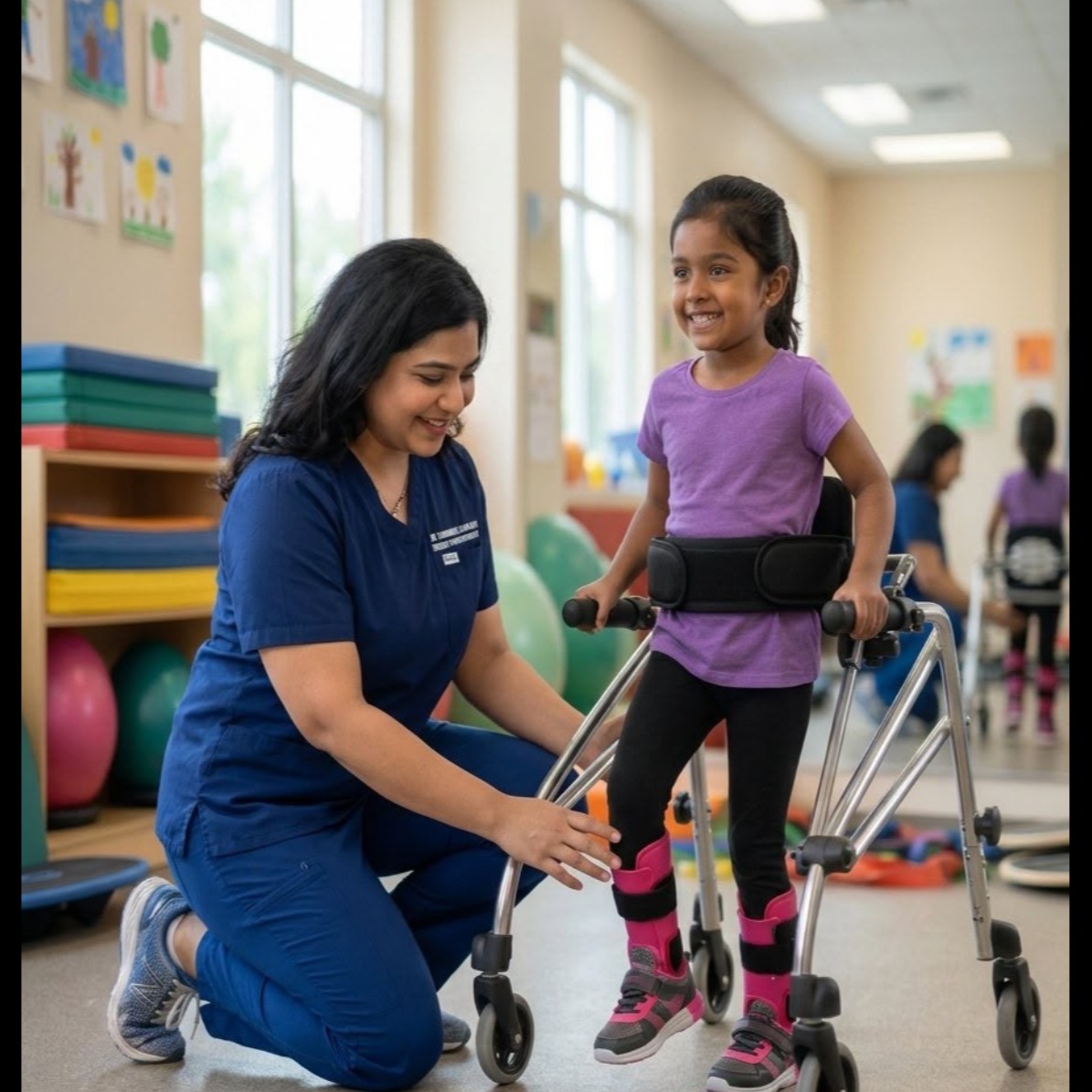
Physiotherapy management of cerebral palsy (CP) at Physionautics , We focus on maximizing functional independence, improving mobility, building strength, and preventing secondary musculoskeletal deformities. Treatment plans are individualized based on the child's age, motor type (such as spastic or dyskinetic), and functional level.
Treatment Approaches Task-specific training, constraint-induced movement therapy (CIMT) for hemiplegia, bimanual training (HABIT), strength training, fitness training, serial casting, and massage, Functional & Mobility Training: Practicing developmental milestones, sit-to-stand transitions, gait training, and treadmill training with or without body-weight support, Traditional neurodevelopmental treatment (NDT/Bobath) and sensory integration training are no longer recommended as primary standalone approaches.
Core Management Strategies, Muscle Tone & Spasticity Control, Strength & Endurance, Assistive Devices & Orthoses , Goal-Directed Family-Centered Care: Setting functional, meaningful targets with the family to improve daily activities and long-term quality of life.