
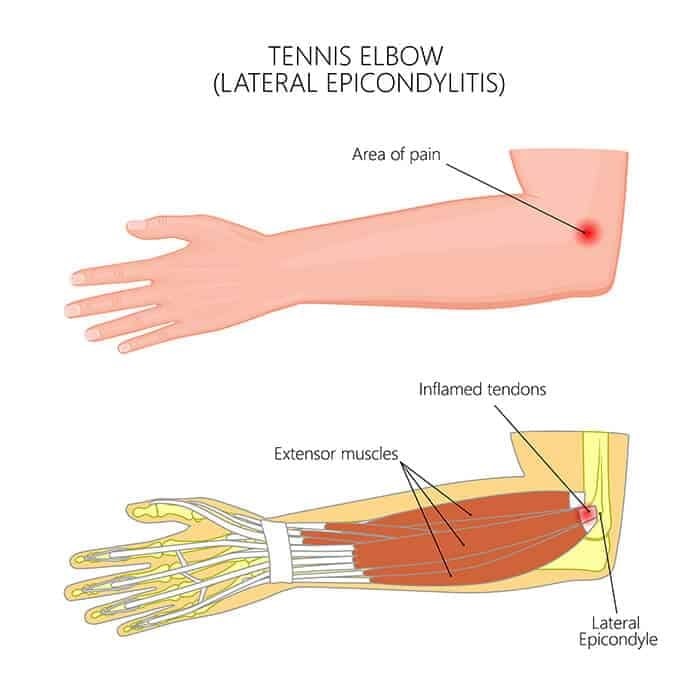
Tennis elbow, or lateral epicondylitis or lateral elbow tendinopathy, is an elbow condition that is painful and affects the tendons that attach the forearm muscles to the outer elbow. It is often caused by repetitive wrist extension, gripping, lifting, twisting, or overuse of the forearm muscles. Tennis elbow doesn’t just affect tennis players, it can also affect office workers, gym enthusiasts, carpenters and people doing repetitive daily activities.
Common symptoms include pain and tenderness on the outside of the elbow, weakness while gripping objects, trouble lifting a cup or carrying a bag, and pain with wrist extension or forearm rotation. If not properly managed, symptoms can gradually worsen and interfere with work, sports and day to day activities.
At Physionautics Physiotherapy Clinic the goal of treatment is to reduce pain, improve tendon capacity, recover grip strength and bring patients back to their normal activities. The rehabilitation program starts with a thorough assessment of pain, elbow and wrist mobility, grip strength, activity limitations and contributing factors. Depending on the condition of the patient, treatment may consist of activity modification, ice for short-term pain relief, gentle mobility exercises, progressive wrist extensor strengthening. Manual therapy can be used where appropriate, followed by eccentric and concentric strengthening to improve the tendon’s ability to tolerate daily loads. Functional training helps patients get back to work, gym activities and sports safely.
# Key treatment goals at Physionautics:
-
- Reduce elbow pain and tenderness.
- Improve wrist mobility and grip strength.
- Restore forearm muscle strength and tendon function.
- Correct aggravating movement patterns and improve activity tolerance.
- Prevent recurrence through progressive strengthening and ergonomic guidance.
Most patients can improve without surgery with early assessment and consistent rehabilitation. At Physionautics Physiotherapy Clinic, treatment is tailored to the individual symptoms, functional needs and progress of recovery of each patient. See a qualified healthcare professional if you have persistent pain, significant weakness, numbness or symptoms after an injury to rule out other conditions.