
Parkinson's disease is a degenerative neurological disorder that impairs balance, mobility, and general functional independence. Advanced physiotherapy is crucial for preserving quality of life as symptoms like tremors, stiffness, delayed movements, and postural instability worsen over time. Elite physiotherapy focuses on highly targeted, evidence-based techniques to maximize mobility and independence rather than merely simple exercises.
Parkinson's disease physiotherapy is handled precisely and individually at PhysioNautics. Every patient goes thorough evaluation to determine their condition's stage, mobility restrictions, and everyday difficulties. In order to address particular demands, a progressive and organized rehabilitation program is designed.
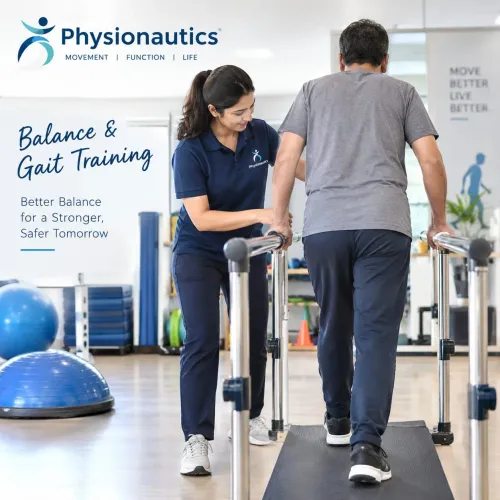
Amplitude-based training, which trains patients to make larger, more purposeful movements, is one of the basic principles adhered to. This minimizes the bradykinesia and hypokinesia that are frequently observed in Parkinson's disease. Through the use of visual feedback and rhythmic auditory cues, gait training is improved, enabling patients to walk faster, take longer steps, and experience fewer freezing episodes.
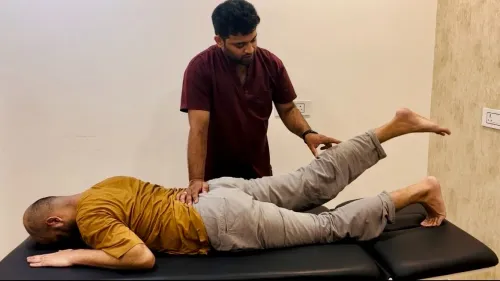
Priority is given to postural control and balance. In order to increase stability, lower the danger of falls, and boost confidence when moving around, advanced balance training techniques are employed. Strengthening exercises are incorporated to assist posture and functional motions, especially for the lower limbs and core.
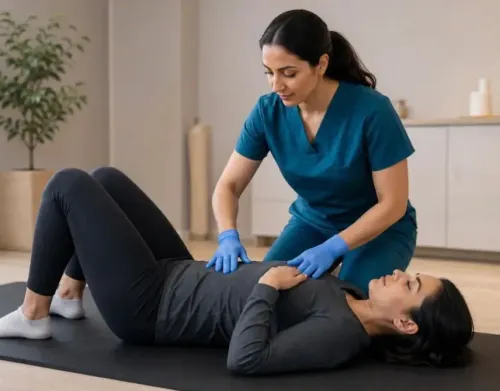
To lessen stiffness and preserve joint range, flexibility and mobility exercises are crucial. In addition, postural correction techniques are used to improve breathing and movement efficiency by addressing the common forward-flexed posture associated with Parkinson's disease.
The emphasis on functional integration is what distinguishes elite physiotherapy. Real-world skills including turning, stair climbing, bed mobility, and sit-to-stand transitions are taught to patients. Task-specific training guarantees that therapeutic gains are immediately applicable to everyday life.
Consistency and education are essential. To ensure continuity of care outside of clinical meetings, patients and caregivers receive guidance on fall prevention tactics, movement strategies, and at-home exercise regimens.
Parkinson's rehabilitation can go beyond symptom control with the correct strategy. It turns into a means of preserving independence, boosting self-esteem, and promoting general wellbeing. People can continue to improve their mobility, lead active lives, and take charge of their path with the help of professional supervision and cutting-edge physiotherapy treatments.