
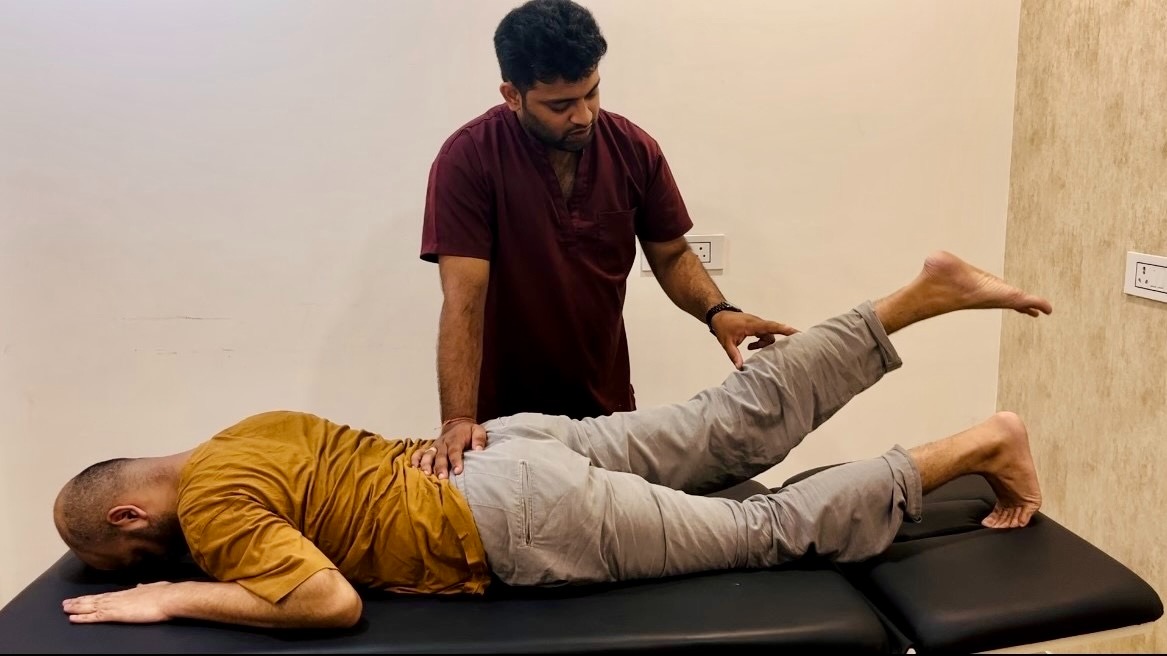
Hip replacement rehabilitation focuses on restoring pain-free movement, muscle strength, balance, gait, and functional independence after surgery. Physiotherapy usually begins with breathing exercises, ankle pumps, gentle hip and knee movements, and early bed mobility, followed by progressive strengthening of the quadriceps, gluteal muscles, hamstrings, and hip abductors. As the patient improves, exercises such as bridging, sit-to-stand, supported squats, and controlled weight-bearing activities are introduced, along with gait training using a walker or appropriate assistive device. Later-stage rehabilitation focuses on stair climbing, balance and proprioception, functional activities, and gradual return to daily activities. Physiotherapists also educate patients about hip precautions, proper positioning, safe transfers, and avoiding movements that may increase the risk of dislocation. A progressive, individualized rehabilitation program helps improve mobility, confidence, strength, and overall quality of life after hip replacement.