
Slipped Disc: Does It Always Mean Surgery? Here's What You Need to Know
If you've been told you have a slipped disc the first thought that hits most people is: "Am I going to need surgery?"
The good news — for the vast majority of patients, the answer is no.
What Actually Happens with a Slipped Disc
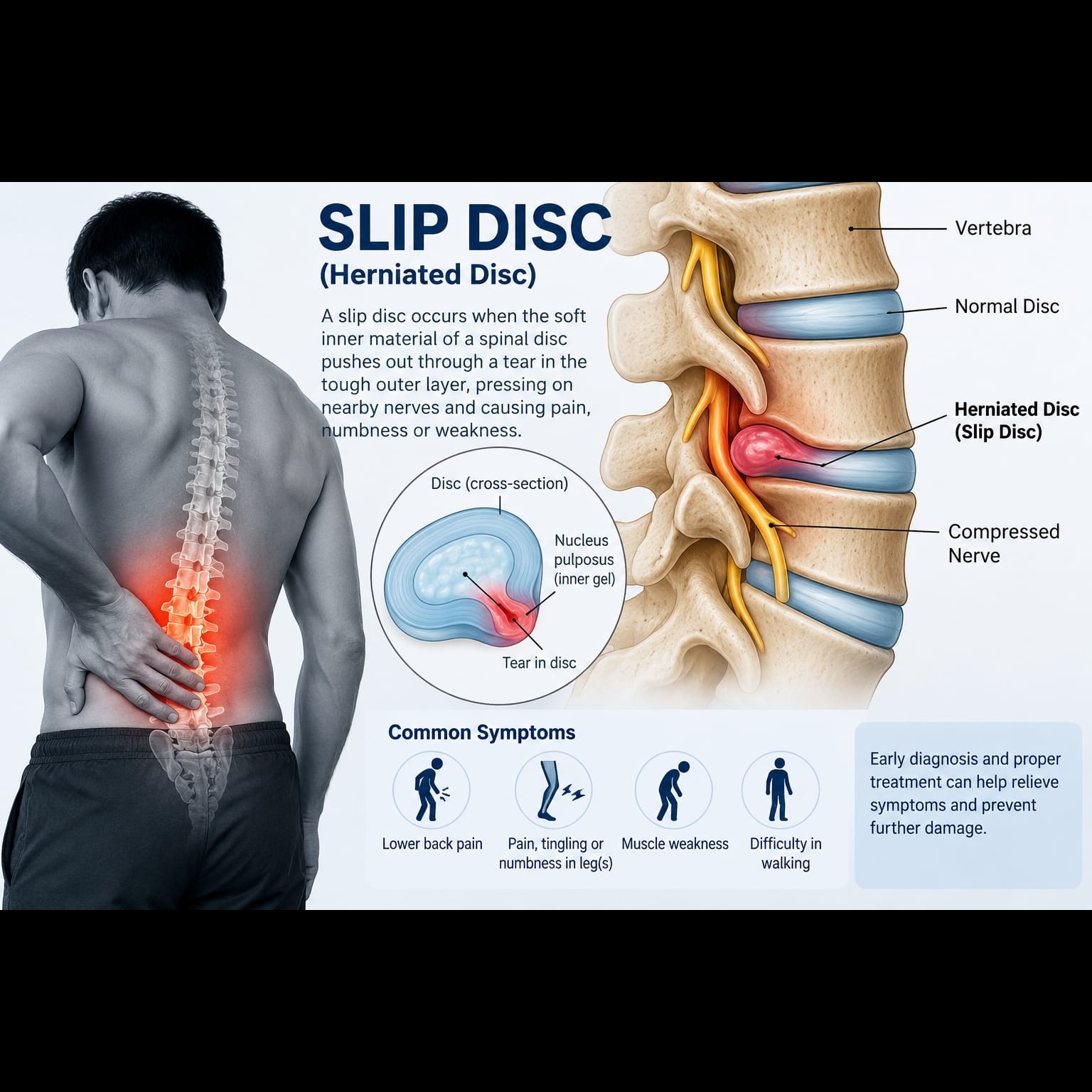
The spine's intervertebral discs act as shock absorbers between vertebrae. When the outer layer weakens or tears, the soft inner material can bulge or herniate outward, sometimes pressing on nearby nerves. This is what causes the classic symptoms — lower back pain, sciatica (radiating leg pain), numbness, or tingling.
But here's what most people don't realize: the body has a remarkable ability to heal this on its own.
80-90% of herniated disc cases resolve with conservative treatment within 6-12 weeks. The body often reabsorbs the disc fragment naturally over time.
If you've been diagnosed with a slipped disc, don't let fear of surgery — or fear from the MRI report itself — drive your decisions. Get a proper clinical assessment, commit to a structured conservative treatment plan, and let your response to that treatment guide to our Physionautics in New Friends Colony.
Have questions about your case? Book a consultation in Physionautics Physiotherapy clinic in New Friends Colony and let's assess it properly.