
CLAW HAND
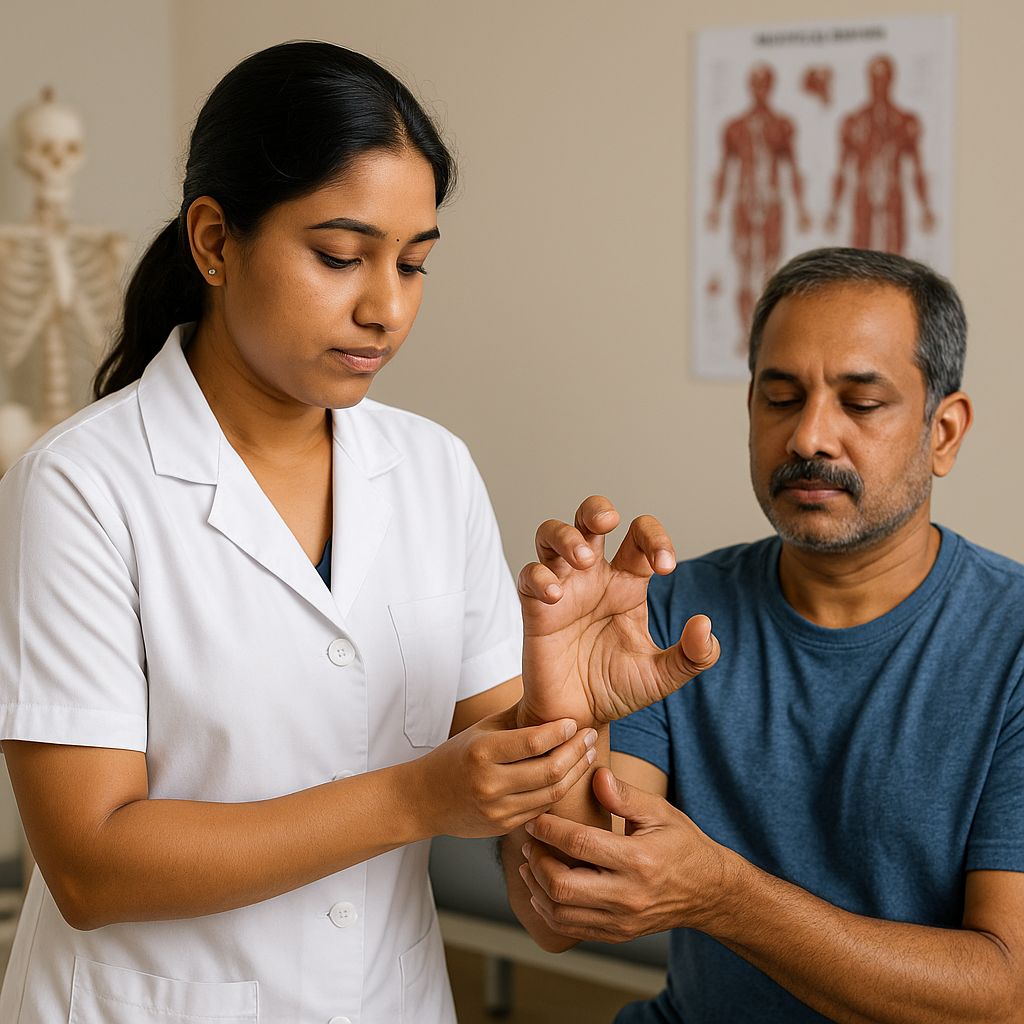
Claw hand is a deformity of the hand characterized by
hyperextension of the metacarpophalangeal (MCP) joints and flexion of the
interphalangeal (IP) joints.
Causes
1. Damage to the ulnar nerve, which controls the intrinsic
muscles of the hand, can cause claw hand.
2. Muscle imbalance between the extrinsic and intrinsic
muscles of the hand can lead to claw hand.
3. Conditions such as spinal cord injury, cerebral palsy, or
peripheral neuropathy can cause claw hand.
4. Trauma to the hand or forearm can cause claw hand.
Symptoms
-Hyperextension of the MCP joints and flexion of the IP
joints, resulting in a claw-like appearance.
-Decreased ability to perform fine motor tasks, such as
grasping or manipulating objects.
-Weakness in the intrinsic muscles of the hand.
-Pain or discomfort in the hand or fingers.
Treatment
1. Physical therapy: Physical therapy can help improve range
of motion, strength, and function of the hand. Pain management can also be done
2. Splinting can help correct the deformity and improve
function.
3. Medications, such as pain relievers or muscle relaxants,
may be prescribed to manage symptoms.
4. In some cases, surgery may be necessary to release tight
tendons or repair damaged nerves or muscles.
5. Occupational therapy can help individuals adapt to claw
hand and develop strategies for daily activities.
6. Assistive devices, such as adaptive utensils or tools,
can help individuals with claw hand perform daily activities.