
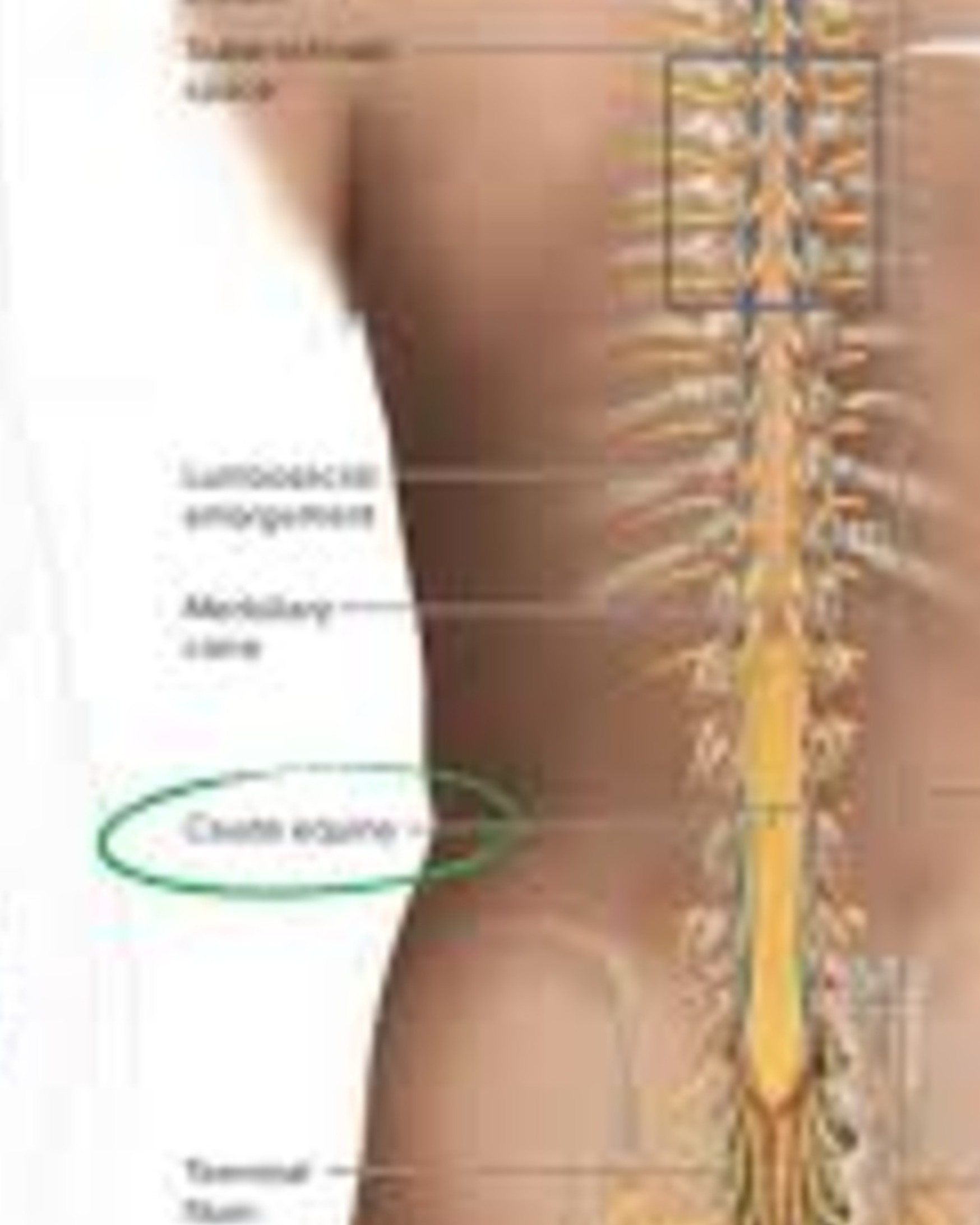
Compression of the bundle of nerves at the lower end of the spine can result in Cauda equina syndrome (CES), a dangerous spinal disorder. The legs, feet, bladder, intestines, and pelvic feeling are all controlled by these nerves, which are referred to as the cauda equina. It can be brought on by an injury, tumor, or infection, but a big slipped disc is the most common cause. This is a medical emergency; in order to avoid irreversible harm, prompt action is necessary.
Common Symptoms:
Severe lower back discomfort that can travel down one or both legs (similar to bad sciatica).Numbness or tingling in the buttocks, inner thighs, groin, and private areas.Bladder or bowel issues include difficulties passing pee, unexpected incontinence, loss of sensation when you need to go, and constipation.Weakness in the legs, difficulty walking, or foot drop.
If you have back pain coupled with any of these “red flag“ symptoms, particularly bladder difficulties, go to the hospital emergency room right away for scans and probable surgery. Time is very important here.
Correct Physiotherapy Management
Physiotherapy is essential for healing following surgery (or when the doctor approves it). A qualified physiotherapist develops a safe, gradual regimen to help you regain strength, control, and return to regular life.
Key aspects of physiotherapy include:Gentle core and back strengthening exercises to help stabilize the spine.Pelvic floor exercises help you regain bladder and bowel control, Leg strengthening and stretching can help reduce weakness, Balance and walking training (gait re-education) to ensure safe movement, Posture correction and tips for safe daily motions (sit, stand, lift, etc.).
Gradual evolution from fundamental movements to useful tasks.
Sessions begin slowly and increase in difficulty as you develop. Regular physiotherapy allows most people to restore substantial strength and independence within weeks to months.
At Physionautics, we offer experienced, personalized physiotherapy for cauda equina syndrome that is tailored to your specific needs, allowing you to heal faster and more effectively. Our hands-on approach and patient-centered guidance make the rehabilitation process easier and more effective.
Early medical intervention, followed by persistent physiotherapy, provides the best chance for a positive outcome. Always get guidance from your doctor or physiotherapist based on your specific condition.