
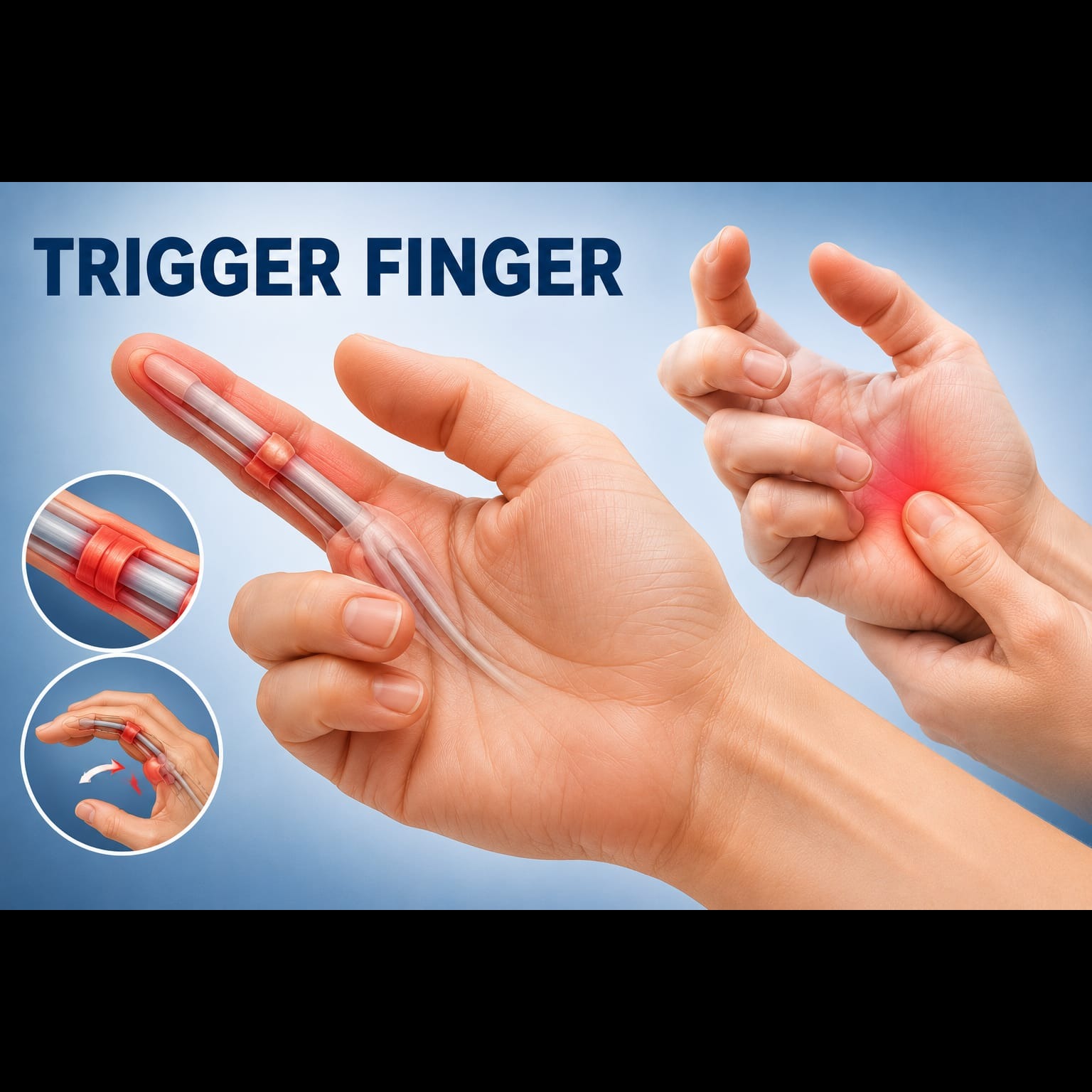
Trigger Finger, also called stenosing tenosynovitis, is a condition in which one of the fingers or the thumb gets stuck in a bent position and suddenly snaps straight like a trigger when moved. It happens when the tendon that helps bend the finger becomes inflamed or thickened, making it difficult for the tendon to glide smoothly through its sheath.This condition commonly affects the thumb, middle finger, or ring finger. Trigger finger is more common in people who perform repetitive gripping activities such as typing, using tools, lifting objects, sewing, gardening, or prolonged mobile phone use. It is also seen in people with diabetes, arthritis, hand injuries, or conditions causing tendon inflammation. Repetitive strain on the hand and poor hand ergonomics can increase the risk of developing trigger finger.The most common symptoms include pain and tenderness at the base of the finger or thumb, stiffness especially in the morning, clicking or popping sensation during movement, difficulty straightening the finger, and locking of the finger in a bent position. In severe cases, the finger may remain stuck and require support from the other hand to straighten it.Physiotherapy plays an important role in reducing pain, improving tendon movement, and restoring normal hand function. Treatment usually begins with activity modification, rest, and avoiding repetitive gripping activities. Ice therapy, ultrasound therapy, and TENS may be used to reduce pain and inflammation. Gentle stretching and tendon gliding exercises help improve smooth tendon movement and reduce stiffness.
At Physionautics, advanced physiotherapy treatment for trigger finger includes TECAR therapy, laser therapy, soft tissue mobilization, myofascial release, tendon release techniques, and customized hand rehabilitation programs. Strengthening exercises for the fingers, wrist, and forearm are gradually introduced to improve grip strength and prevent recurrence. Ergonomic correction and posture education are also provided to reduce strain during daily activities.Early physiotherapy management helps reduce pain, restore finger mobility, improve hand function, and avoid the need for injections or surgery in many patients.