
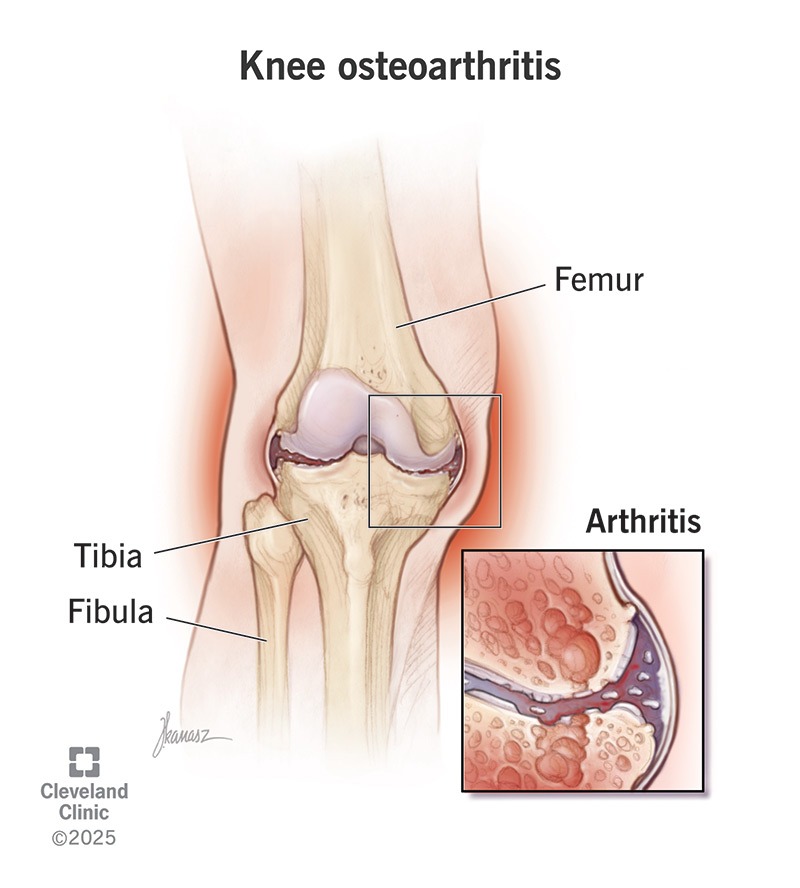
Knee Arthritis
At the NFC Centre, the physiotherapy management of knee arthritis begins with a detailed assessment to identify the patient’s pain level, stiffness, functional limitations, muscle weakness, gait abnormalities and activities that aggravate symptoms. Assessment includes pain using VAS/NPRS, knee range of motion, swelling and joint-line tenderness, quadriceps and hamstring strength, hip muscle strength, flexibility, gait pattern, functional activities such as sit-to-stand and stair climbing, and relevant special tests when clinically indicated. The initial treatment aims to reduce pain and stiffness, improve knee mobility and restore functional movement. Depending on the patient’s presentation, treatment may include appropriate thermotherapy or cryotherapy, TENS/IFT for pain modulation, gentle soft-tissue techniques, patellar and tibiofemoral mobilization when indicated, and active range-of-motion exercises. Exercises are progressed according to irritability and functional capacity, beginning with gentle quadriceps activation, static quadriceps sets, straight-leg raises, heel slides, ankle pumps and gentle knee mobility exercises. Patient education is an important part of the protocol, including activity modification, pacing, weight-management advice when appropriate, avoiding prolonged or excessive loading during painful periods, and teaching safe movement strategies during daily activities.
As symptoms improve, the rehabilitation programme at the NFC Centre progresses from pain control and mobility restoration toward strengthening, balance, gait training and functional rehabilitation. Progressive resistance exercises are introduced for the quadriceps, hamstrings, gluteal muscles and calf muscles, including resisted knee extension, hamstring curls, bridges, sit-to-stand exercises, mini-squats within a comfortable range, step-ups and controlled functional exercises. Hip abductor and core strengthening are included to improve lower-limb alignment and reduce excessive stress on the knee during functional activities. Balance and proprioception training, gait re-education and appropriate aerobic conditioning such as walking or stationary cycling can be incorporated according to tolerance. The intensity, repetitions and resistance are gradually increased while monitoring pain, swelling and recovery after exercise. The overall goal of the NFC Centre physiotherapy protocol is to reduce pain, improve knee ROM and muscle strength, enhance walking and daily functional activities, improve confidence and independence, and help the patient maintain long-term joint function through an individualized home-exercise programme and regular reassessment.
Add clear treatment phases
Include contraindications and precautions
Add measurable reassessment criteria.