Temporomandibular joint (TMJ) disorder is a condition that affects the joint connecting your lower jaw to the side of your skull. When this joint doesn’t work smoothly, it can cause pain, stiffness, or clicking sounds when you open or close your mouth. Some people also feel headaches, neck pain, or trouble chewing and yawning comfortably. TMJ problems can happen for many reasons such as stress, poor posture, teeth grinding, or even habits like chewing gum often. While it can be uncomfortable, the good news is that physiotherapy can help restore normal movement and relieve pain in a safe, gentle way.
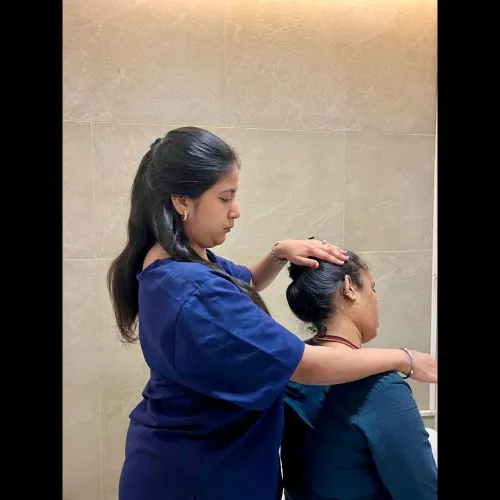
Physiotherapists start by carefully assessing your symptoms to understand what might be causing the problem. Treatment usually begins with simple methods to ease pain, such as applying heat, using gentle massage, or electrical therapy like TENS to relax tight muscles around the jaw. Manual therapy includes hands-on techniques used by the therapist which can help ease tension, improve joint movement, and reduce stiffness. You will also learn special exercises designed to keep your jaw muscles strong and flexible. These exercises focus on smooth, controlled movement without pain and help you regain comfort in everyday activities like eating and talking.
Posture training is an important part of physiotherapy too. Many people don’t realize that slouching or keeping their head pushed forward can strain the jaw. We, physiotherapist will guide you on how to maintain better posture and daily habits to reduce stress on the TMJ. Relaxation techniques, including breathing exercises, are also helpful because stress and clenching your jaw can make symptoms worse. Education plays a big role throughout therapy in which one can learn what triggers your symptoms, what habits to avoid, and how to care for your jaw at home.TMJ disorder is that it is non-invasive and focuses on self-management, giving patients the tools they need to control their symptoms. With the right guidance and consistent practice, physiotherapy can significantly reduce pain, improve jaw movement, and help people return to normal activities with more comfort and confidence.
The main goal is to help you return to daily life without pain and with a smile that doesn’t hurt.

New Friends Colony, New Delhi
08048032705
+919582772318
 Chat with us
 Chat with us