
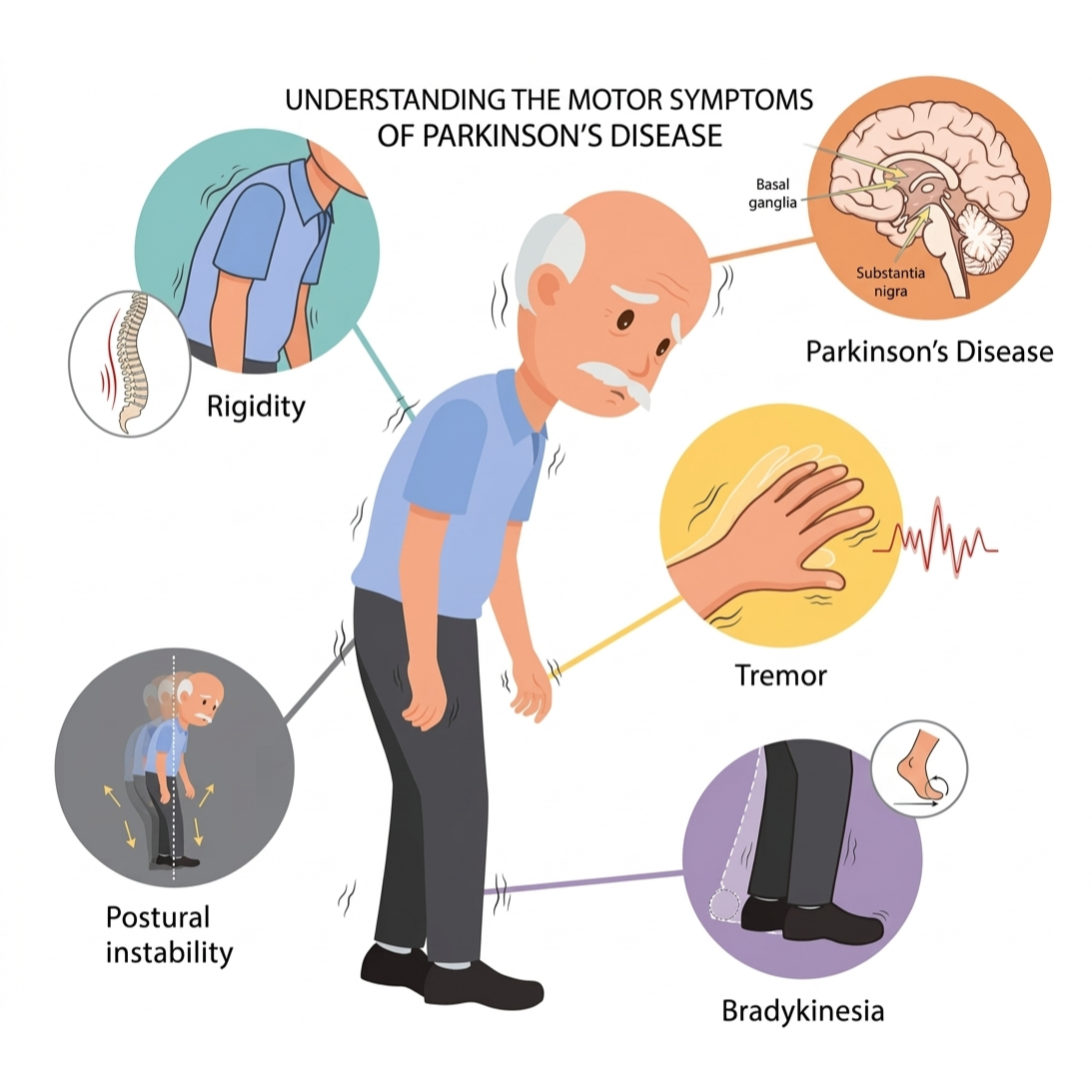
Parkinson’s disease is a slowly progressive neurological disorder that affects movement. This happens due to a decrease in dopamine in the brain, which is required for smooth and coordinated muscle activity. Parkinson’s occurs when brain cells start to degenerate over time, leading to problems like tremors, stiffness, slow movements, difficulty in activities of daily living, and poor balance. The exact cause of Parkinson’s is not known, but it is commonly linked to aging, genetic factors, and exposure to harmful chemicals or toxins. Physiotherapy plays a very important role in managing Parkinson’s disease and improving quality of life. Physiotherapy helps by keeping the body active, reducing stiffness, and improving movement. Physiotherapy treatment after a proper assessment includes stretching to reduce tightness, strengthening exercises to improve muscle support, balance training to prevent falls, and brain gym and cognitive exercises to improve coordination, focus, and overall brain function. Falls are a lot more common in Parkinson’s patients. Walking practice or gait training is important, where patients are taught to take bigger steps and use cues like counting or visual cues to avoid shuffling or freezing. Posture correction exercises help reduce the forward bending posture seen in many patients. Physiotherapists also teach daily activities like sitting, standing, and turning safely. Regular exercise, along with physiotherapy and medical treatment, helps patients stay independent, confident, and active for a longer time. If you or your loved one is experiencing such symptoms, seeking timely care can make a significant difference at Physionautics, our experienced team is dedicated to providing personalized physiotherapy care to help improve mobility, safety, and overall quality of life.