
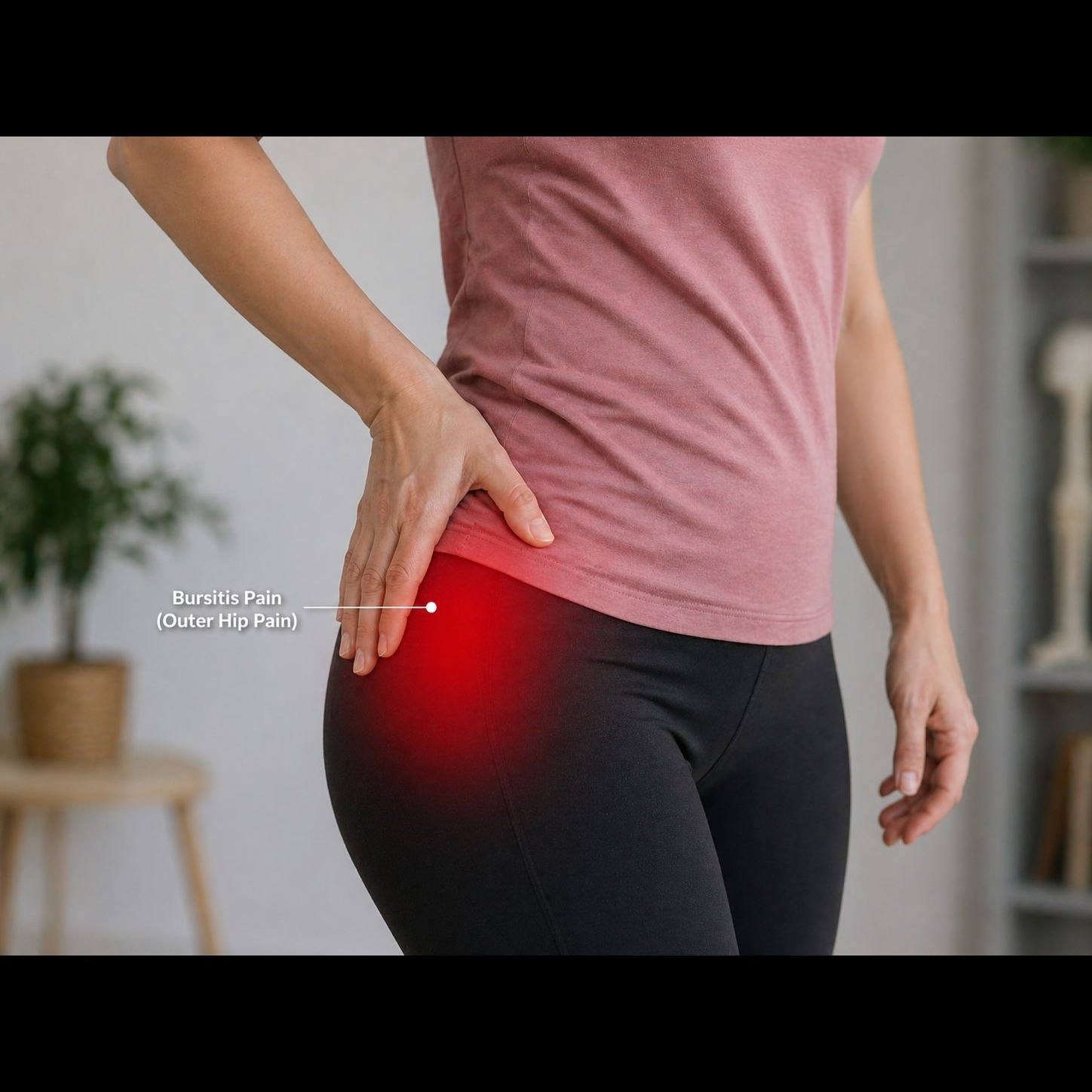
Bursitis is the inflammation of a small fluid-filled sac called a bursa, which helps reduce friction between muscles, tendons, and bones. Around the hip joint, the most commonly affected area is the greater trochanter (GT), leading to what is often called trochanteric bursitis or greater trochanteric pain syndrome. This condition usually develops due to repetitive stress, prolonged standing, weak gluteal muscles (especially gluteus medius), tight IT band, poor posture, or even lower back involvement. While mild discomfort around the outer hip can sometimes occur after heavy activity, persistent pain around the GT is not normal and should not be ignored. Patients typically experience pain on the outer side of the hip, tenderness on touch, difficulty lying on the affected side, and discomfort while walking, climbing stairs, or getting up from sitting. Physiotherapy plays a crucial role in treating this condition by not only reducing pain but also correcting the root cause. Treatment includes pain relieving modalities like IFT, ultrasound, and ice therapy, along with manual therapy techniques to release tight structures such as the IT band and surrounding muscles. Most importantly, targeted exercises help strengthen weak muscles especially the gluteus medium and improve hip stability, while stretching routines address tightness in the hip flexors and surrounding tissues. Posture correction and gait training further ensure long term recovery and prevent recurrence. At Physionautics, a comprehensive approach combining advanced physiotherapy techniques, hands-on manual therapy, and personalized exercise programs ensures faster healing, better movement, and long-term relief, helping patients return to their daily activities pain-free and stronger than before.