


BEST PHYSIOTHERAPY TREATMENT AFTER TOTAL HIP REPLACEMENT SURGERY IN NEW FRIENDS COLONY.
2026-04-04T08:17:37  read more
 read more
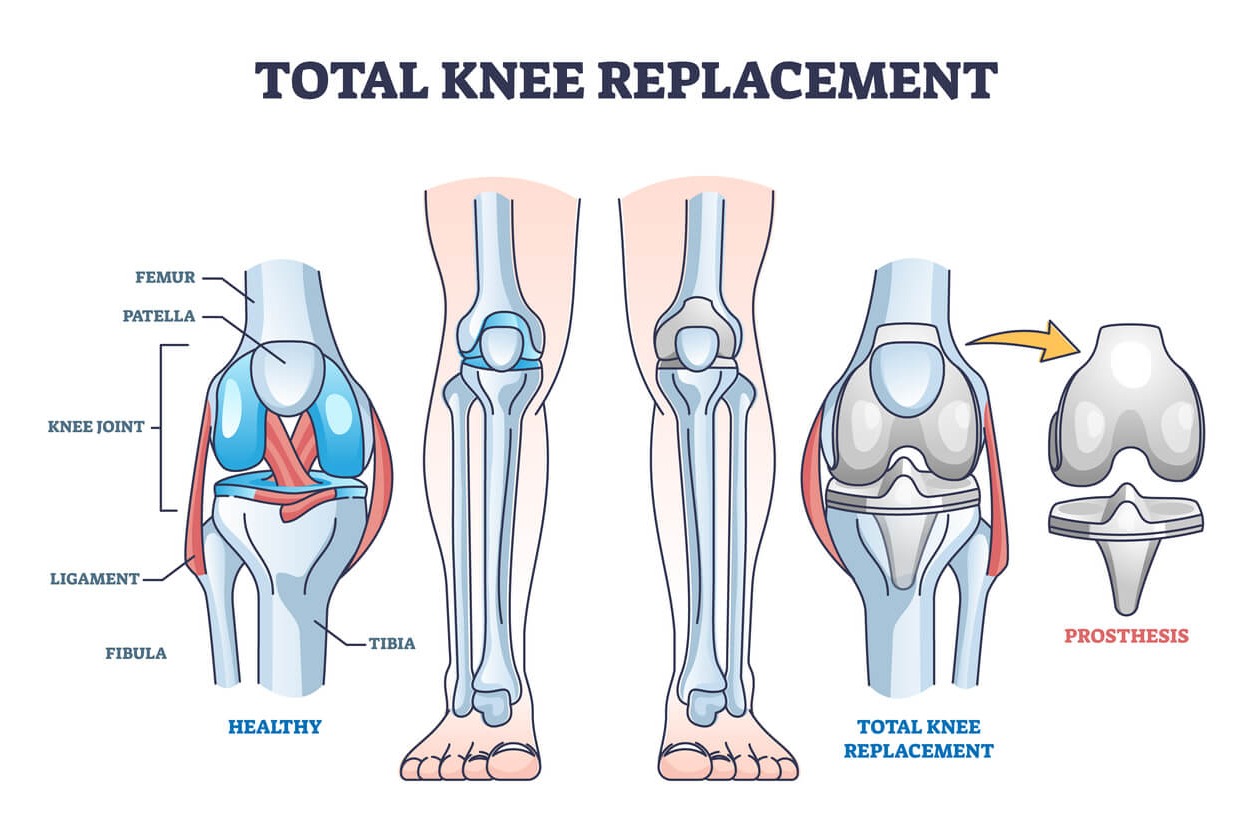

Total knee replacement is advised when the knee joint is severely damaged and daily activities become difficult. Common causes include advanced osteoarthritis, rheumatoid arthritis, severe injury, or deformities. Patients often experience persistent pain, swelling, stiffness, difficulty in walking, standing, or climbing stairs. Pre-operative (before surgery):Strengthening quadriceps, hamstrings, and hip muscles, Improving knee range of motion.Gait training with walker/crutches.Education about post-surgery exercises and precautions. Post-operative (after surgery):Pain and swelling management.Early mobilization (bed mobility, sitting, standing, walking).Range of motion exercises (especially knee bending and straightening).Quadriceps strengthening (very important).Gait training for normal walking pattern.Balance and functional training (stairs, daily activities) At Physionautics, we provide personalized and advanced rehabilitation programs:Electrotherapy (IFT, Ultrasound) to reduce pain and swelling.Manual Therapy: Improves joint mobility and reduces stiffness.Myofascial Release: Relieves muscle tightness.CPM (Continuous Passive Motion): Helps improve knee bending early.Balance & Proprioception Training: Prevents falls.Gait Analysis & Correction: Restores proper walking pattern.Progressive Strength Training: Focused on quadriceps and functional recovery. At Physionautics, we focus on a holistic and patient-specific approach. From early recovery to advanced functional training, we guide patients step-by-step to regain mobility, strength, and confidence. Our aim is to help patients return to their daily activities safely and efficiently. Proper physiotherapy plays a key role in achieving the best outcome after total knee replacement.
 read more
 We hate spam too.


