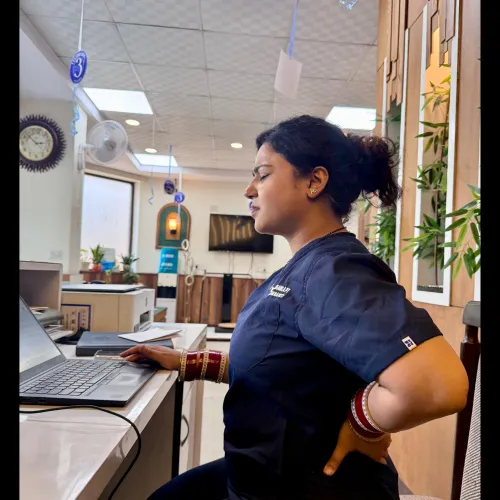

Ergonomics is the science of designing your environment to fit your body, not the other way around. When a workspace is set up well, movement feels natural, breathing is easier, and the day ends without that familiar stiffness creeping in. When it's not, the body compensates in small ways, thousands of times a day, until something starts to hurt.
For anyone doing desk work from home, this matters more than most people realize. There’s no facilities team adjusting your setup or a standing desk readily available when you work from home. Just whatever chair is available and a desk that probably wasn't chosen with eight-hour workdays in mind.
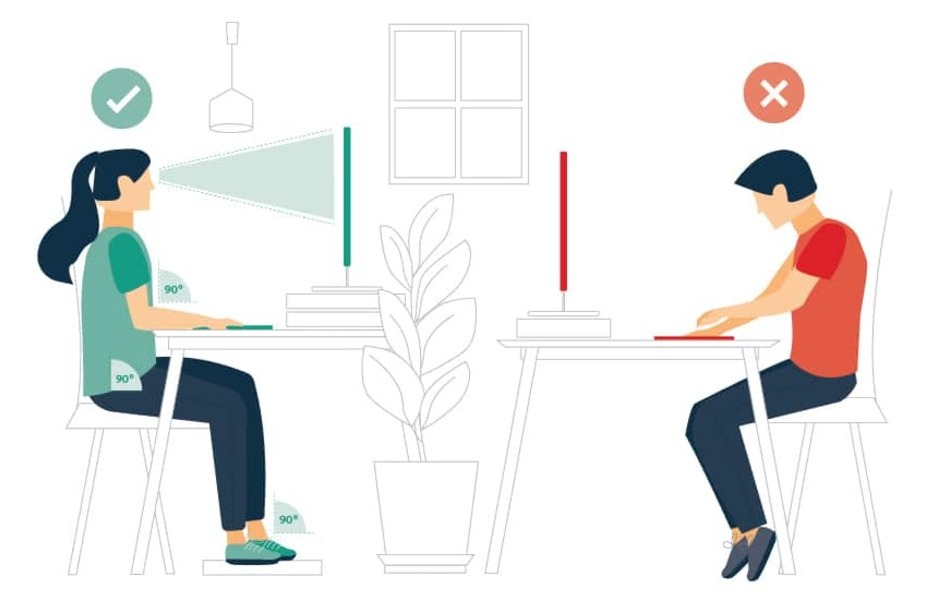
Start with the chair. Feet flat, knees at 90 degrees, and the lumbar support actually supporting the lower back. Most people sit at the edge without noticing. Scoot back and let the chair do its job.
The monitor is likely too low. The top of the screen should sit at roughly eye level to avoid spending the whole day looking down. A cheap laptop stand plus an external keyboard fixes this immediately and makes a noticeable difference.
Wrists should stay straight while typing, not tilted up or angled inward. Folding the keyboard feet down helps with this. It feels strange for a day, then feels obvious.
Movement matters just as much as any physical adjustment. Getting up every hour, looking away from the screen every 20 minutes, these aren't optional extras. No ergonomic setup fully compensates for sitting completely still all day.
Small changes done consistently add up. The body always signals when something is off. The goal is to start listening before it gets loud.