
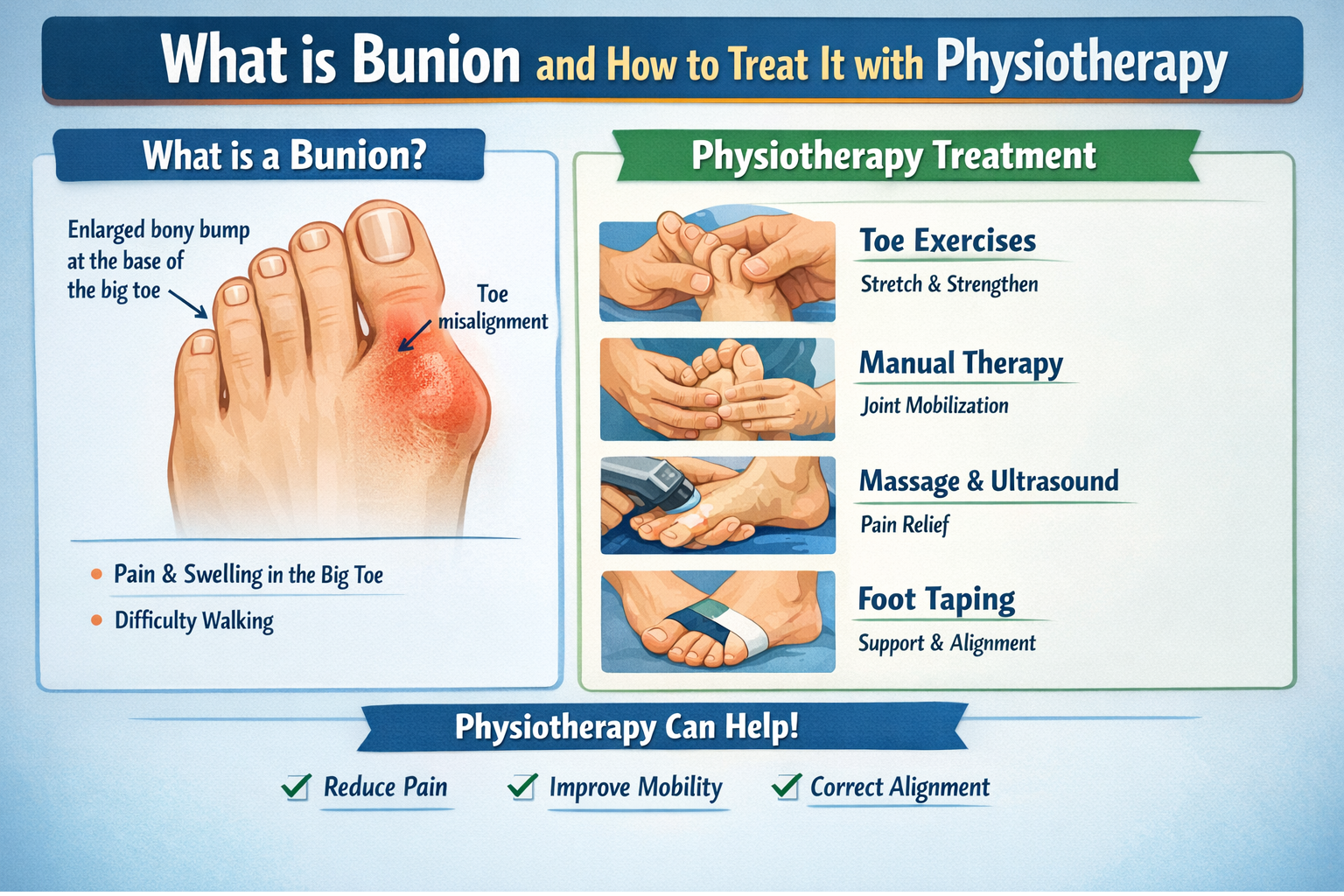
A bunion (medically known as Hallux Valgus) is often misunderstood as just a “bony growth“ on the side of the big toe. In reality, it is a structural change in the foot where the big toe starts leaning toward the second toe, causing the base of the toe to push outward.
while bunions can be painful, they are very common and highly manageable without jumping straight to surgery.
When the foot bone (metatarsal) shifts outward, the joint becomes inflamed. Over time, this creates a firm, often red bump that can make wearing shoes uncomfortable or even painful
Common Causes:
Foot Mechanics: Having flat feet or low arches can put uneven pressure on the big toe joint.
Genetics: You might have inherited a foot structure that is prone to shifting.
Footwear: Tight, narrow, or high-heeled shoes don't necessarily cause bunions, but they certainly speed up the progression and worsen the pain.
How Physiotherapy Helps?
Many people think surgery is the only fix, but physiotherapy is incredibly effective at managing pain and stopping the bunion from getting worse. While a physical therapist cannot “un-bend“ the bone but we can fix the muscle imbalances that are pulling the toe out of place.
1. Manual Therapy and Joint Mobilization
We use hands-on techniques to “loosen“ the stiff joints in your foot and ankle. This helps restore a more natural range of motion and reduces the “throbbing“ sensation often felt after a long day of walking.
2. Strengthening the “Intrinsic“ Muscles
The tiny muscles inside your foot act like a support system for your arch. When these are weak, the big toe loses its stability.
Toe Spreading: Learning to move your big toe away from the others.
Short Foot Exercise: Pulling the ball of your foot toward your heel to lift the arch without curling your toes.
3. Improving “Big Toe“ Extension
To walk properly, your big toe needs to bend upward. If it's stiff, your foot rolls inward to compensate, which makes the bunion worse. We stretch this joint flexible to keep it flexible and prevent stiffness.
4. Gait Re-training
Often, the way we walk (our “gait“) puts too much weight on the inner edge of the foot. A physiotherapist can teach you how to push off through the center of your foot, taking the stress off the bunion.
Simple At-Home Management
Ice Therapy: If the bump is red and angry, icing it for 10 minutes can calm the inflammation.
The Right Fit: Switch to shoes with a wide “toe box“ (the front part of the shoe). If your toes can't wiggle, the shoe is too tight.
Toe Spacers: Soft silicone spacers can be worn between the first and second toe to keep the joint in a better position during the day.
A Note on Being Kind to Your Feet , try to view your foot care as a form of self-compassion rather than a chore. Our feet carry us through life, giving them the right support and exercise is important which you can find at PhysioNautics.