
De Quervain's tenosynovitis
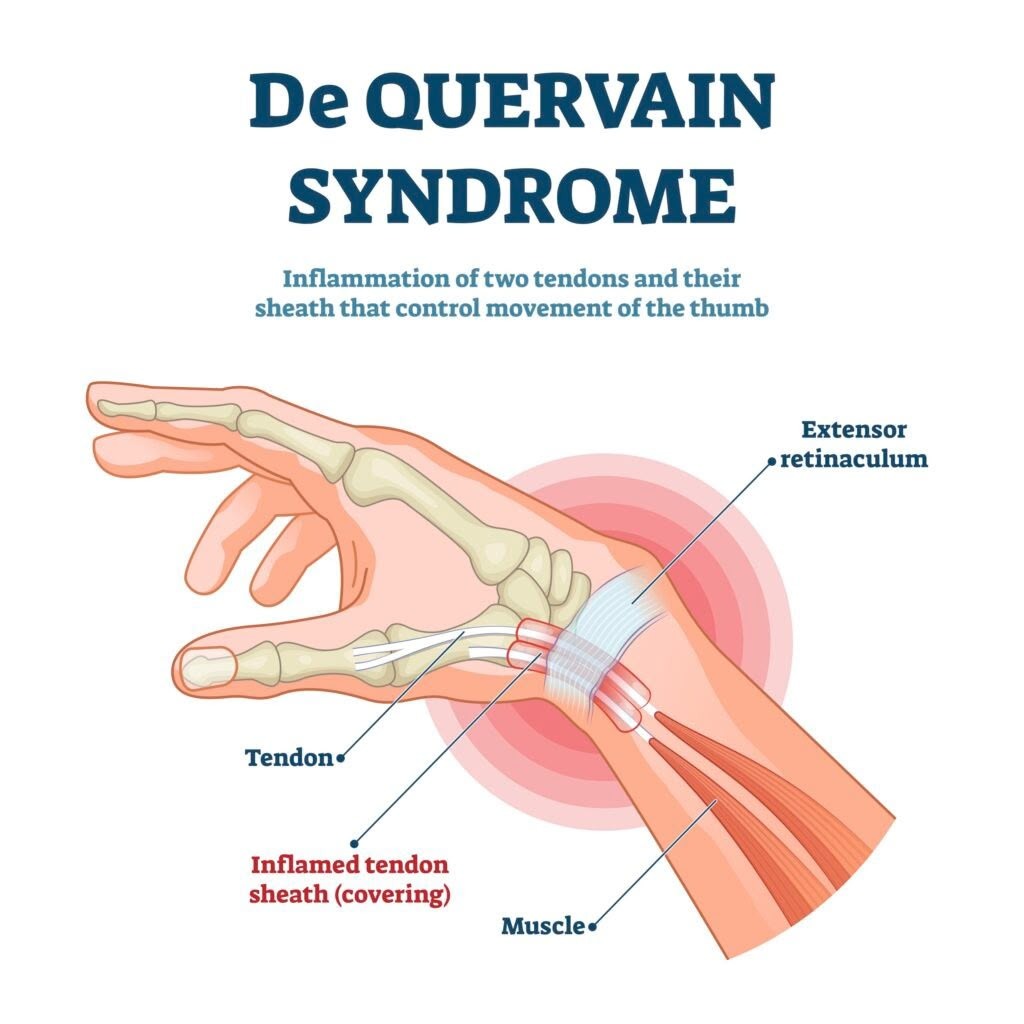
It is a painful condition affecting the base of thumb , inflammation and swelling of the tendon sheath surrounding the two thumb tendons (the abductor pollicis longus and extensor pollicis brevis) on the thumb side of the wrist.
The pain is associated with abduction of thumb , grasping of objects in hand and ulnar deviation
WhatsApp thumb is a modern, informal name for De Quervain’s tenosynovitis or localized tendonitis caused by repetitive texting, scrolling, and typing on smartphones.
Etiology
The condition is most commonly found in women than men
Repeated use of hand for functional activities is considered as main cause of this condition
Myxoid degeneration
The process in which the connective tissues are replaced by a gelatinous substance
Symptoms / clinical features
• Pain and tenderness near the base of the thumb that can radiate up the forearm.
• Swelling or a fluid-filled lump on the thumb side of the wrist.
• Difficulty and pain when gripping, pinching, grasping, or twisting objects.
• A catching, sticking, or popping sensation when moving the thumb.
Causes and risk factors
• Repetitive overuse: Frequent motions involving the thumb and wrist from typing, gardening, playing sports, or lifting.
• New parents (“mommy thumb“): Repeatedly lifting or carrying a baby while using the thumbs for leverage.
• Hormonal and physical changes: Fluid retention during or after pregnancy.
• Demographics: Most commonly affects adults between 30 and 50 years old, and occurs more frequently in women.
Diagnosis
• Physical examination: Evaluated clinically through the Finkelstein maneuver, where you place your thumb inside your palm, make a fist, and bend your wrist toward your little finger; pain on the thumb side of the wrist indicates a positive test.
Physiotherapy Treatment at Physionautics -
We will assess you thoroughly and make a individualised treatment plan accordingly
First line of management - PRICEM
P- protection to inflamed tendon in thumb spica splint
R-Rest
• Resting the thumb and avoiding painful movements.
• avoid doing typing from affected thumb , limit use to mobile phone from affected side
I- application of cold pack
C- compression of inflammed site by proper use of splint
E- keeping the hand elevated
M-First we will work on pain management- by using electrotherapy modalities
Pulsed ultrasound, low intensity laser therapy, contrast bath etc
Besides the modalities used in acute stage , physiotherapy in subacute and chronic stage
Aimed at reducing pain and improving strength and mobility
Deep transverse friction massage to tendon within pain tolerance
Gratson technique of soft tissue mobilisation along with the eccentric excercise is also helpful
Mobilisation
Mobility - excercises
Most important strengthening to the weak musculature
Grip strengthening exercises
Reducation of Fine motor skills
Home programme for maintenance and to reduce the chances of reoccurrence