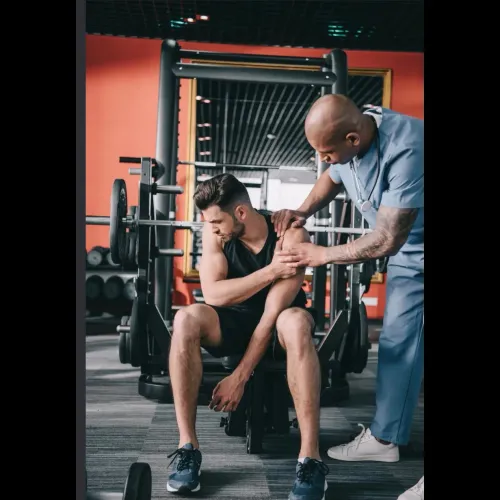

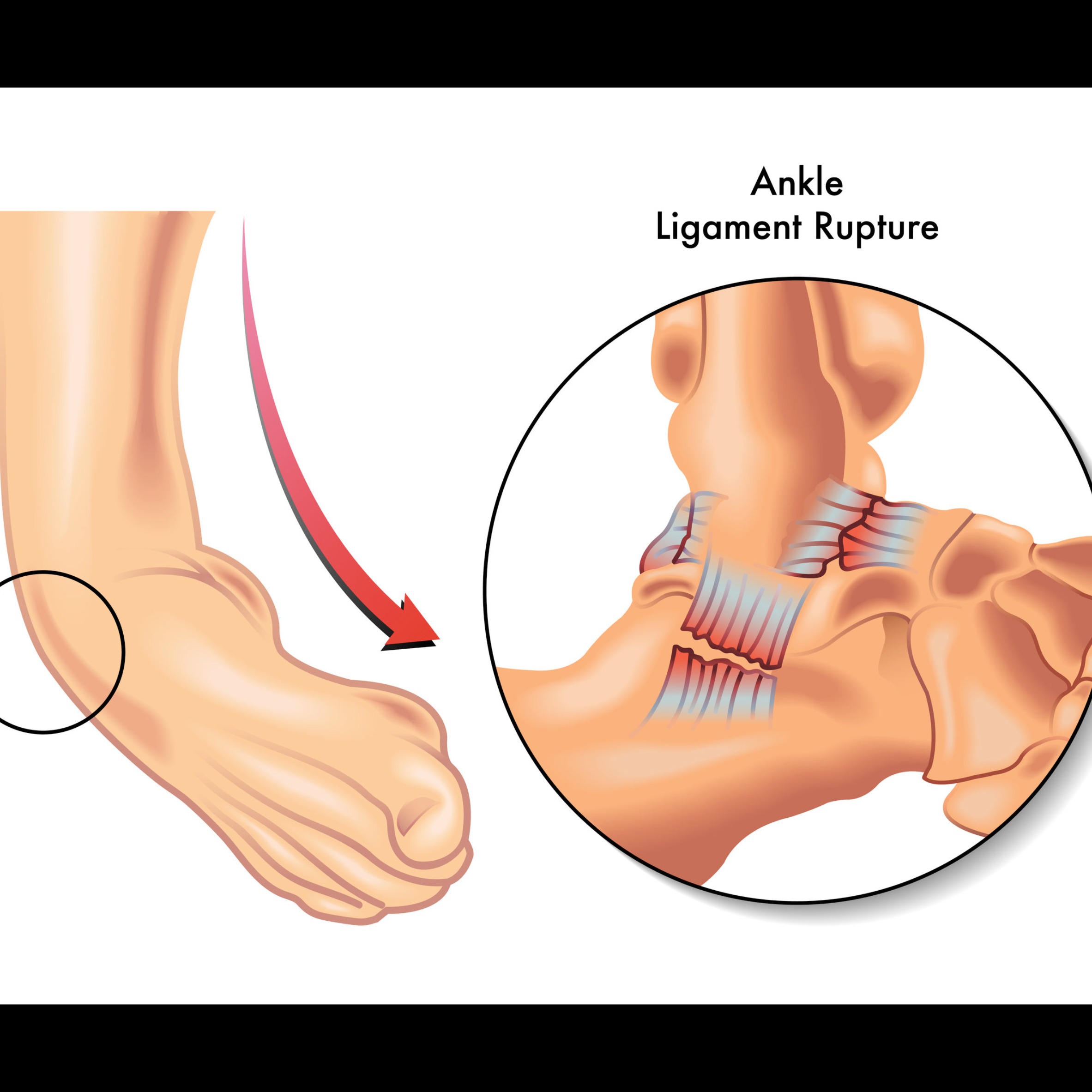
An ankle sprain is one of the most frequent injuries we see, not only in athletes but also in normal daily life. It usually happens when the foot suddenly twists or rolls inward, causing the ligaments around the ankle joint to stretch beyond their limit or tear. This injury can occur while walking on uneven ground, missing a step, landing awkwardly during sports, or even slipping at home. When a sprain occurs, the person immediately feels sharp pain, followed by swelling, tenderness, and difficulty putting weight on the foot. Sometimes bruising also appears, which indicates internal tissue damage. As a physiotherapist, the first 48 hours are extremely important because the right early management can make recovery much faster. During this phase, we strictly follow the R.I.C.E. protocol, which stands for Rest, Ice, Compression, and Elevation. Resting the ankle prevents further damage, applying ice for 15–20 minutes helps reduce swelling, compression with a crepe bandage gives support, and elevation keeps the swelling under control. Many people ignore this step, and because of that, the swelling stays longer and delays healing. Once the pain and swelling start to settle, physiotherapy treatment becomes the key to complete recovery. In the early rehabilitation stage, we begin with gentle mobility exercises like ankle pumps, toe curls, and circular movements to restore normal joint motion. These simple exercises improve blood circulation and prevent stiffness. As the patient improves, we gradually introduce strengthening exercises using a theraband. Strengthening the ankle in all directions—dorsiflexion, plantarflexion, inversion, and eversion—helps rebuild the stability that the injured ligament has lost. One of the most important parts of ankle sprain rehabilitation is balance training, because after an injury, the ankle loses its natural ability to sense position, called proprioception. Without proper balance training, the patient becomes more likely to sprain the ankle again in the future. That’s why exercises like single-leg standing, heel-to-toe walking, and wobble board balancing are essential. These exercises retrain the muscles and ligaments to respond quickly and stabilize the joint during sudden movements. As the patient enters the final stage of recovery, we work on functional activities like walking faster, light jogging, side-stepping, and small jumps, depending on the person’s daily lifestyle or sports requirements. For athletes, sport-specific drills are gradually added to prepare them safely for return to play. Throughout the treatment, we also educate patients on footwear, warm-up routines, and preventive strengthening to avoid future injuries. One of the biggest mistakes people make is ignoring an ankle sprain or relying only on home remedies. If not treated properly, a simple sprain can lead to chronic ankle pain, weakness, instability, and repeated injuries, which can affect walking, running, and overall quality of life. Physiotherapy not only helps in faster healing but also ensures that the ankle becomes strong, stable, and ready for full activity. So if you ever experience an ankle sprain, do not delay your physiotherapy. Early treatment is the best way to return to your normal routine safely and confidently.