
The TMJ (Temporomandibular Joint) is a hinge joint located close to the ear. It's the joint that connects the jawbone to the skull and is responsible for all of the movement of the jaw, that is from talking to chewing. However, it can often become a source of a lot of pain and discomfort.
There are multiple reasons for TMJ pain or discomfort. It could be due to an old injury, constant teeth grinding, stress, or even poor posture that puts pressure on the neck and jaw muscles.
There can be pain on the face or around the jaw area, difficulty in opening or closing the mouth properly, stiffness in the jaw muscles, popping or clicking sounds whenever the jaw moves, and pain on the neck or nearby areas.
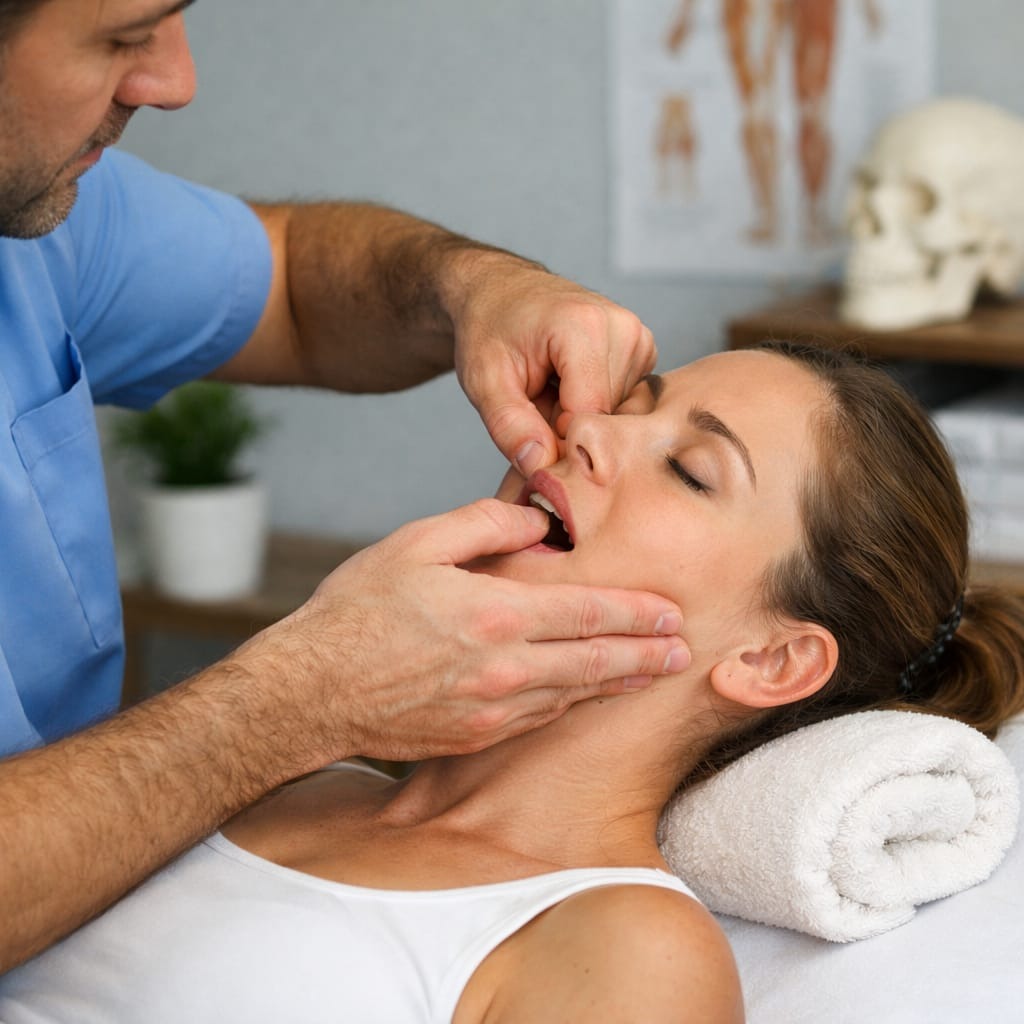
The TMJ joint pain or dysfunction can be treated by physiotherapy as other musculoskeletal disorders. The physiotherapists first conduct and assessment and on the basis of that the treatment is planned which can incorporate -
Manual Techniques: These are used to release tightness in the jaw and neck muscles. If the pain is coming from postural issues, working on these muscles helps bring the muscle tone back to normal.
Modalities: For those dealing with active pain and inflammation, different modalities are used to provide relief and calm the area down.
Exercises: Once the pain is under control, specific exercises help strengthen the muscles and improve the overall mobility of the joint so the problem doesn't keep coming back.
If you have the similar condition you can visit, Physionautics, there is a team of expert physiotherapists to provide complete treatment and care.