
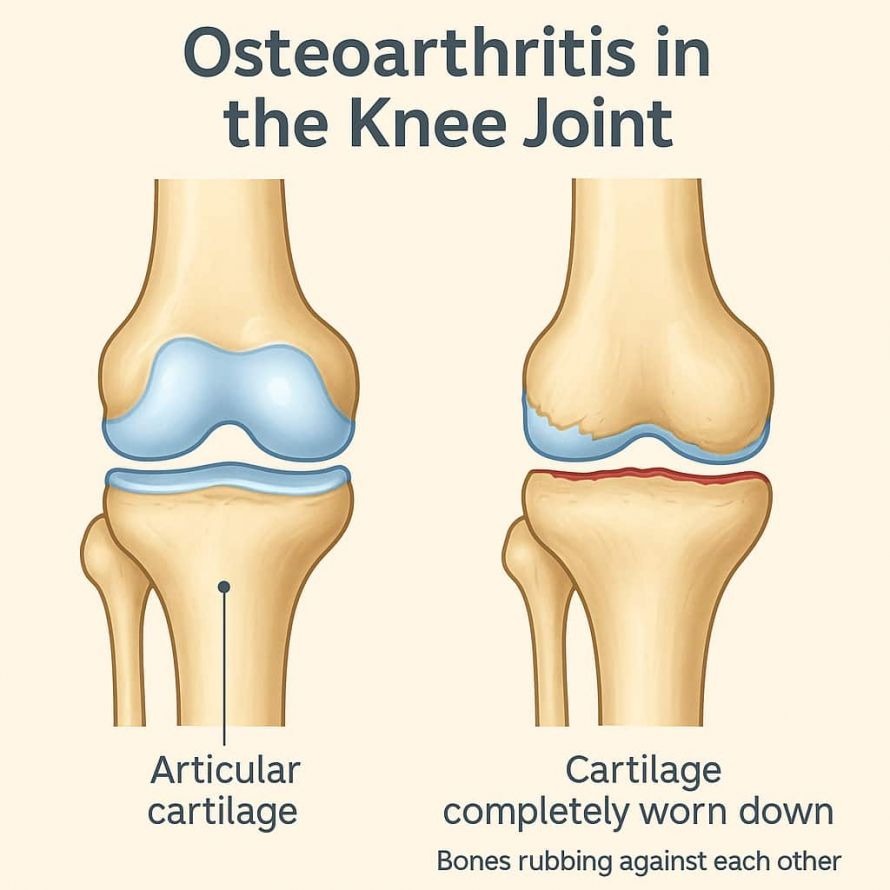
Osteoarthritis is a common cause of joint pain and stiffness, such as in the knees, hips, spine and hands. Osteoarthritis is a long term wear and tear type of condition in which the protective cartilage covering the bone slowly breaks down and the surrounding bone and soft tissues are affected from which the joint becomes painful, swell and stiff over time. Early diagnosis, lifestyle changes and physiotherapy can slow down the progression and help to stay active and independent.
The risk factors are old age, previous injuries, obesity, repetitive heavy loading, genetics and certain occupations or sports increase the stress on joints and speed up cartilage degeneration. The muscles also becomes weak and tight which also further increases joint load. Patients usually complain of deep, aching joint pain that is worse with activity, morning or post‑rest stiffness, reduced range of motion and difficulty in activities of daily living such as walking, stair climbing, squatting, getting up from a chair, or gripping objects.
Physiotherapy plays a major role in osteoarthritis management and is recommended in international guidelines as a first‑line, non‑pharmacological treatment along with education and weight management. The first step is to assess that which joints are affected, what is the severity of pain, range of motion, muscle strength, balance, posture, functional limitations and lifestyle. This helps as in to make a customized protocol for the patient as to treat the condition. The goals are to reduce pain and stiffness, improve joint mobility and muscle strength, correct faulty movement patterns, maintain or increase activity levels.
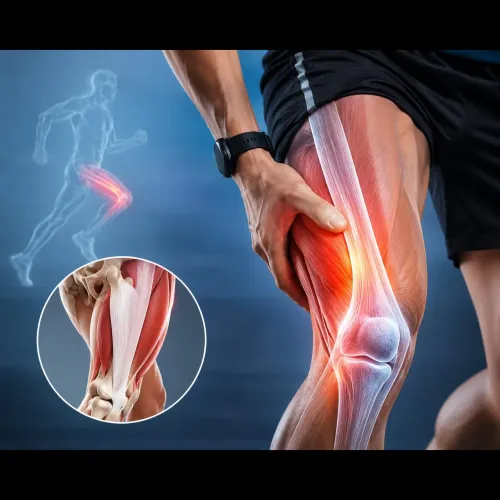
Exercises are the most important part of physiotherapy rehab for osteoarthritis. Strengthening exercises which focuses on the key muscles around the affected joint for example, quadriceps and hip muscles in knee OA, gluteal in hip OA, and scapular and hand muscles in upper limb OA to support the joint and reduce the load going through damaged cartilage. Range of motion and stretching exercises help keep the joint moving, reduce stiffness and maintain flexibility of muscles like hamstrings and calf which are often tight in knee OA. Low impact aerobic activities such as walking, cycling or aquatic exercise are usually added to improve general fitness, mood and weight control because even slight weight loss in overweight people significantly reduces mechanical stress on the knee and hip joints.
Manual therapy techniques to reduce stiffness and improve movement especially when combined with an active exercise program are also part of the rehab. In many patients, manual joint mobilization and patellar mobilization for knee OA show improvements in pain, range of motion and walking ability. Also the heat and cold therapy, TENS, taping, braces, walking aids and footwear or orthotic advice are used to reduce pain, support alignment and make activities of daily living safe and easy.
Education is equally important component of physiotherapy for osteoarthritis. Advices for joint protection (avoiding deep squats or kneeling for knee OA), ergonomic changes, and home exercise plans that can be done routinely.
Physiotherapy should be started ideally soon after diagnosis or as soon as symptoms begin which gives the best chance to slow progression and helps to avoid surgeries. Even in later stages or while waiting for joint replacement, a targeted physiotherapy program can maintain strength, mobility and cardiovascular fitness, improving surgical outcomes and recovery.
Osteoarthritis is a lifelong condition, but with the right physiotherapy guidance, regular exercise and healthy lifestyle choices, many people are able to continue walking, working, exercising and live a independent life.
Visit Physionautics for expert care and complete Physiotherapy solutions.