
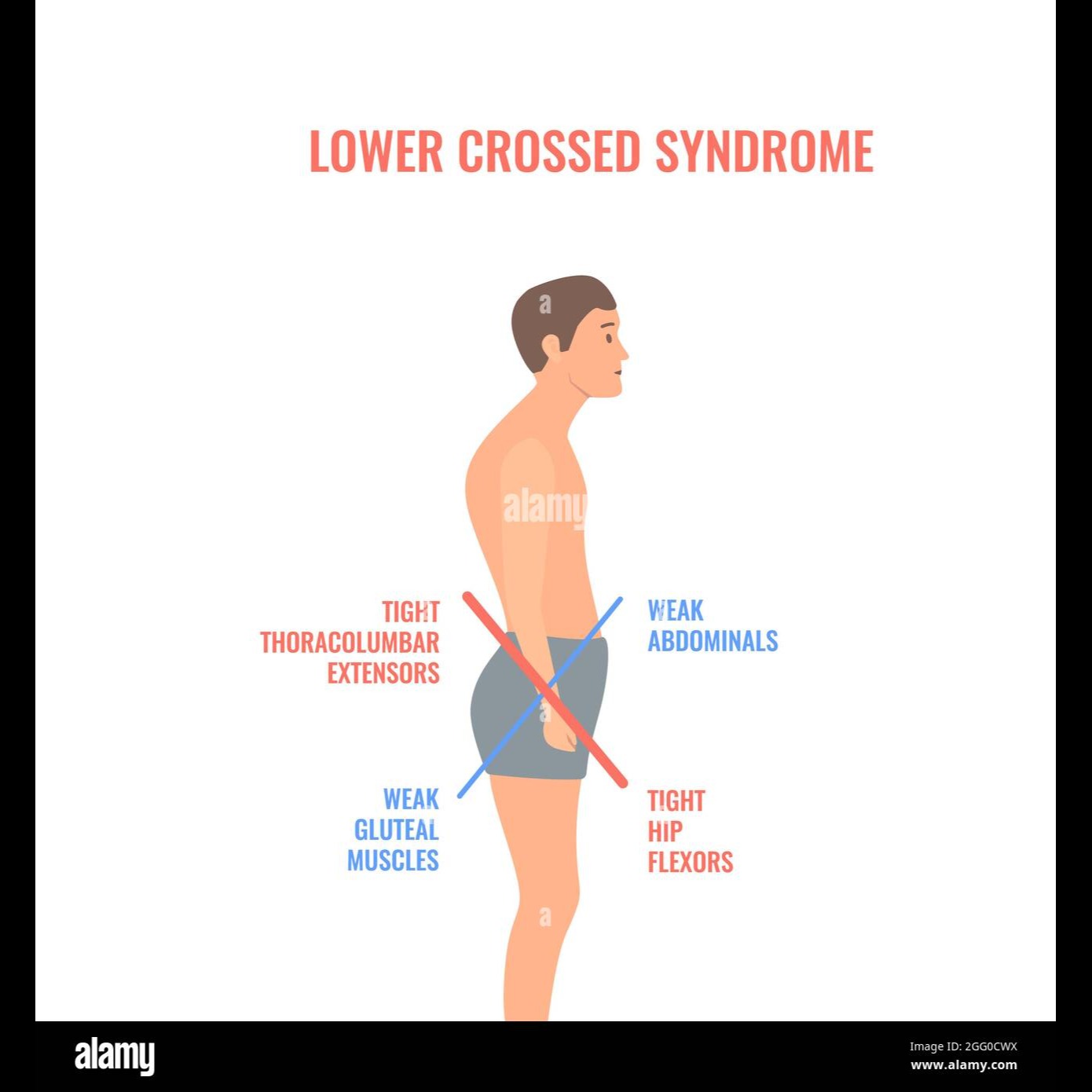
Lower Crossed Syndrome (LCS) is a common postural dysfunction frequently seen in individuals with prolonged sitting habits, poor ergonomic awareness, and reduced physical activity. As a physiotherapist, we often observe this condition in office workers, drivers, students, and even athletes who follow improper training patterns.
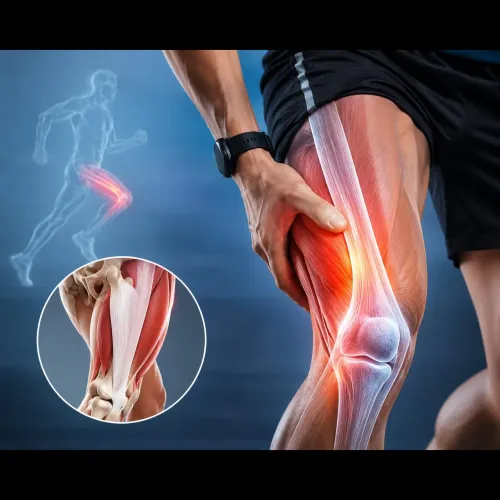
This syndrome is characterized by a predictable pattern of muscle imbalance around the lumbopelvic region. In Lower Crossed Syndrome, there is tightness and overactivity of certain muscles, mainly the hip flexors (iliopsoas and rectus femoris) and lumbar extensors (erector spinae). At the same time, there is weakness and inhibition of the abdominal muscles and gluteal muscles. This crisscross pattern of tight and weak muscles gives the condition its name.
Due to these imbalances, the pelvis tends to shift into an anterior pelvic tilt, which increases lumbar lordosis. Over time, this altered posture places excessive stress on the lumbar spine, sacroiliac joints, and hip structures. Patients commonly present with chronic low back pain, hip discomfort, reduced core stability, and early fatigue during standing or walking.
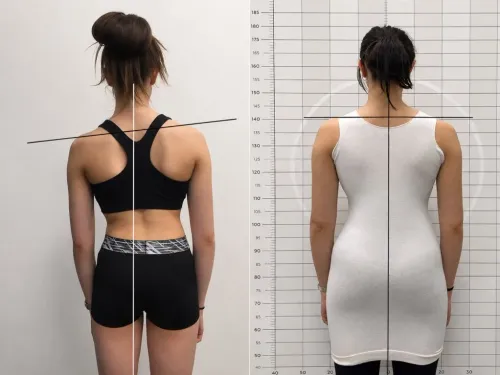
From a physiotherapy assessment point of view, we carefully analyze posture, pelvic alignment, muscle length, strength, and movement patterns. Functional tests often reveal reduced glute activation, poor abdominal control, and limited hip extension. These findings help us confirm the presence of Lower Crossed Syndrome rather than treating only the symptoms.
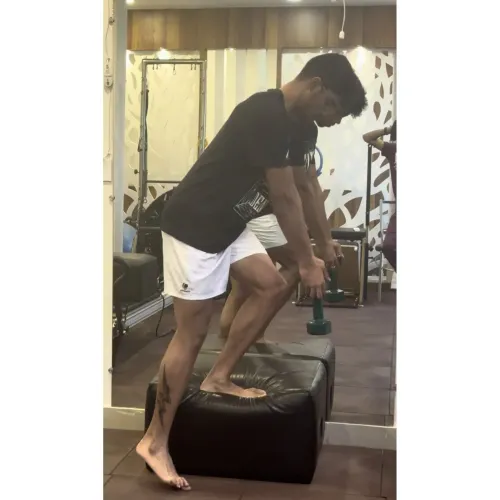
Physiotherapy management focuses on correcting the underlying muscle imbalance, not just pain relief. Treatment includes stretching of tight muscles, especially the hip flexors and lumbar extensors, along with strengthening exercises for the deep abdominal muscles and gluteals. Core stabilization training, pelvic control exercises, and postural re-education play a crucial role in long-term recovery.
Additionally, patient education is an essential part of physiotherapy care. We guide patients regarding proper sitting posture, ergonomic modifications, activity breaks, and correct movement patterns in daily life. Without addressing these factors, symptoms often recur despite temporary relief.