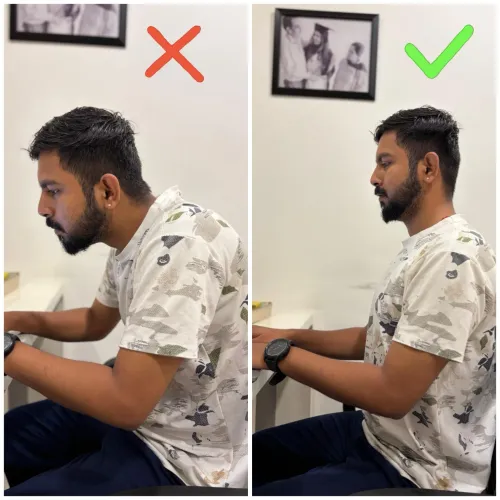

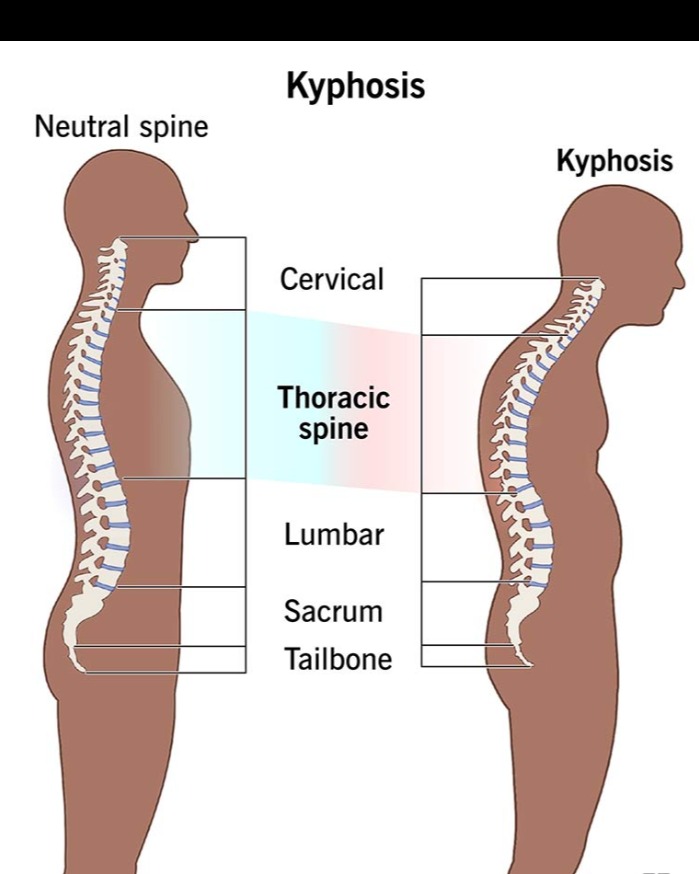
Kyphosis is a spinal condition in which the upper back develops an excessive forward curvature, making the posture appear rounded or hunched. While a normal thoracic spine has a natural curve, when this curve becomes more pronounced, it can affect posture, movement, breathing efficiency, and overall spinal health. Kyphosis can develop due to poor posture, prolonged sitting, muscle weakness, spinal degeneration, osteoporosis, congenital spine changes, or conditions such as Scheuermann’s Disease. Common symptoms include rounded shoulders, upper back stiffness, neck strain, back pain, muscle fatigue, and in severe cases difficulty with prolonged sitting or standing.
Physiotherapy plays an important role in managing kyphosis, especially in early and moderate stages. Treatment focuses on posture correction, spinal mobility, muscle strengthening, and flexibility improvement. Exercises like Thoracic Extension Exercise, scapular strengthening, chest stretching, and core stability training help improve spinal alignment and reduce discomfort. Manual therapy, soft tissue release, breathing exercises, and ergonomic education may also be included depending on the patient’s condition. With early diagnosis and a structured rehabilitation plan, many patients can improve posture, reduce pain, and prevent progression of kyphosis.In Physionautics, personalized physiotherapy programs help patients build stronger posture, better spinal control, and improved confidence in daily activities.