
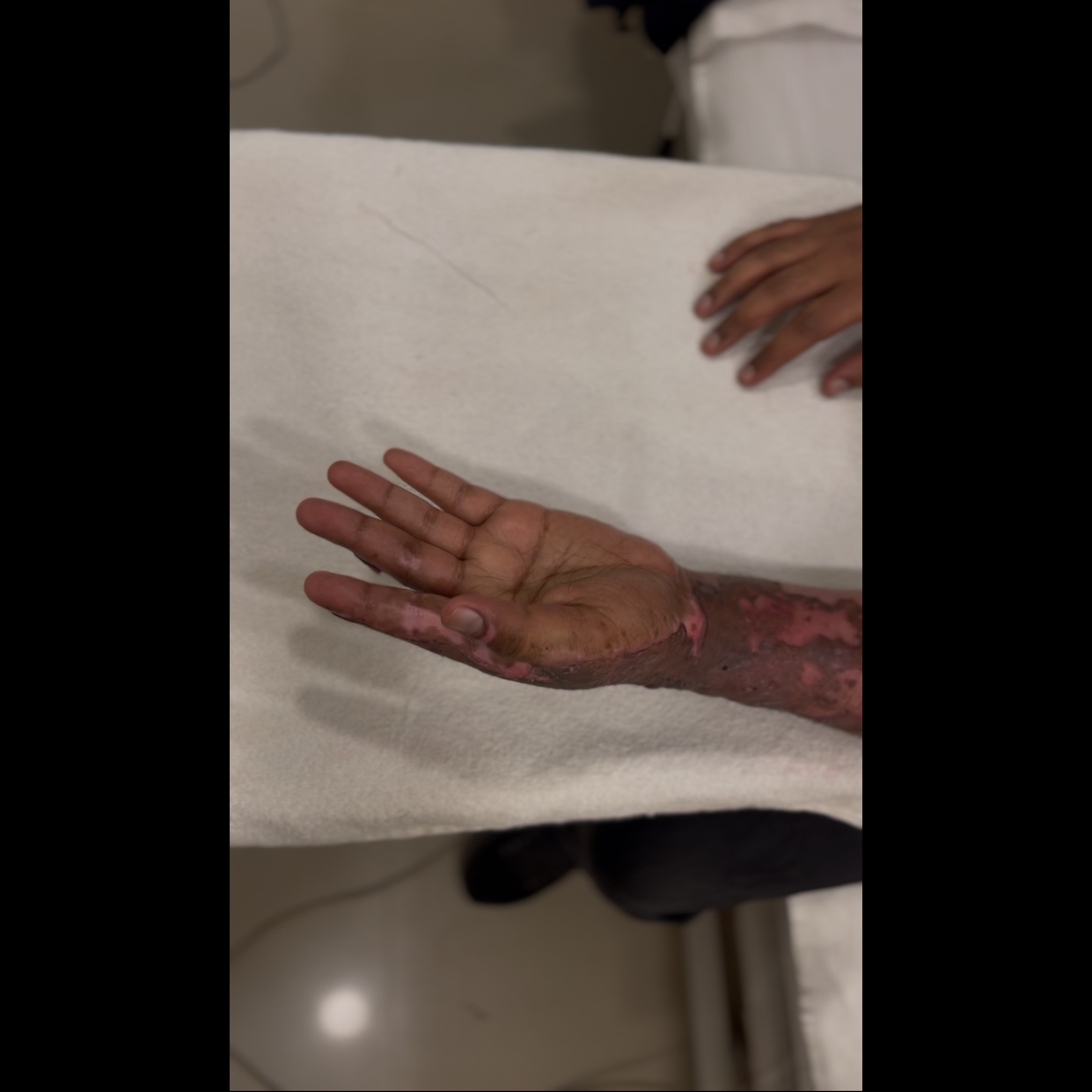
Burn hand rehabilitation in physiotherapy is not just about joints and scars but it is about helping a person trust their own hand again after a painful and frightening injury. In initial phase, once the wound is healing, the focus is usually on controlling swelling, protecting fragile skin, and gently introducing movement so the hand does not stiffen into a painful, clawed posture. The therapist often works finger by finger, guiding slow flexion and extension, encouraging the patient to breathe through discomfort rather than quickly pulling back, because these first movements set the tone for future mobility.
Splints are commonly used to hold the wrist and fingers in functional positions, especially at night, to prevent contractures from forming as the skin and soft tissues tighten during healing.
Scar management becomes a central part of rehabilitation, using techniques such as massage, stretching, and pressure therapy to keep scars supple and reduce tightness that can limit hand function. Strengthening exercises are introduced slowly, helping patients regain grip strength and fine motor control needed for daily activities like buttoning a shirt, holding a spoon, or writing. Sensory re-education is equally important, as burns can alter sensation, making the hand either overly sensitive or numb. Through graded exposure to different textures and temperatures, patients relearn how to trust their hand again.
However, beyond the technical interventions, what truly defines burn hand rehabilitation is the human connection. The physiotherapist becomes not only a guide but also a companion through the emotional waves of frustration and recovery. Simple gestures like offering reassurance, adjusting exercises to match the patient’s tolerance, celebrating small milestones is like make a world of difference. Many patients experience fear of movement, self-consciousness about scars, and even emotional trauma from the burn incident itself. Addressing these feelings with empathy helps them trust both the therapist and their own healing journey. Rehabilitation often extends beyond the clinic walls, with home exercise programs, functional training, and patient education ensuring continuity of recovery. The ultimate goal is not just to restore hand function but to help the individual regain independence, dignity, and confidence. In the quiet persistence of every stretch and every small victory lies the essence of human resilience. Physiotherapy, in this context, becomes more than a medical discipline, it becomes an art of healing that touches both body and spirit, reminding us that recovery is as much about strength of heart as it is about the mobility of hands.