
WRIST DROP
Wrist drop, also known as radial nerve palsy, is a condition
where the wrist cannot be extended or straightened due to weakness or paralysis
of the muscles controlling wrist extension.
Causes
1. Radial nerve damage due to Trauma, Fractures,
lacerations, or compression injuries to the arm or wrist can damage the radial
nerve.
2. Compression neuropathy: Prolonged compression of the
radial nerve, such as from sleeping in an awkward position or using crutches
improperly.
3. Neurological conditions: Certain conditions, such as
peripheral neuropathy or Charcot-Marie-Tooth disease, can cause wrist drop.
Symptoms
1. Inability to extend wrist: Difficulty extending or
straightening the wrist.
2. Weakness: Weakness in the muscles controlling wrist
extension.
3. Loss of grip strength: Decreased grip strength due to
inability to stabilize the wrist.
4. Difficulty with daily activities: Difficulty with
activities that require wrist extension, such as grasping or manipulating
objects.
Treatment
1. Physical therapy: Physical therapy can help improve wrist
mobility and strength. Pain management techniques, such as heat or cold
therapy, can help alleviate discomfort. Muscle re education techniques to
improve function. Muscle stimulator could also be used
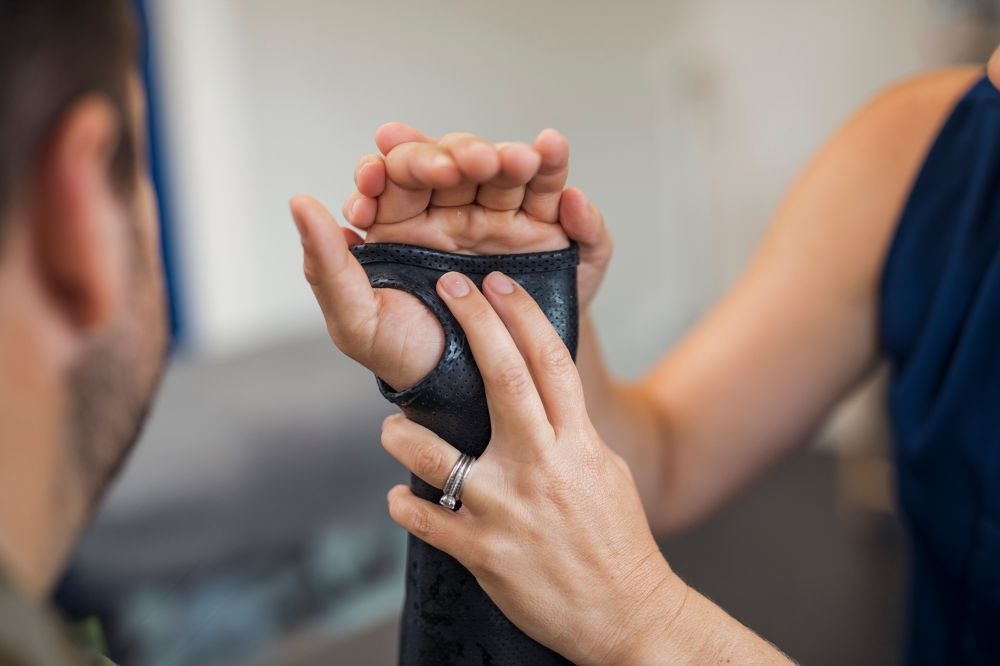
2. Splinting: Wearing a splint can help support the wrist
and improve function.
3. Medications: Medications, such as pain relievers or
corticosteroids, may be prescribed to manage symptoms.
4. Surgery: In some cases, surgery may be necessary to
repair or decompress the radial nerve.
5. Occupational therapy: Occupational therapy can help
individuals adapt to wrist drop and develop strategies for daily activities.
6. Assistive devices: Assistive devices, such as adaptive
utensils or tools, can help individuals with wrist drop perform daily
activities.