
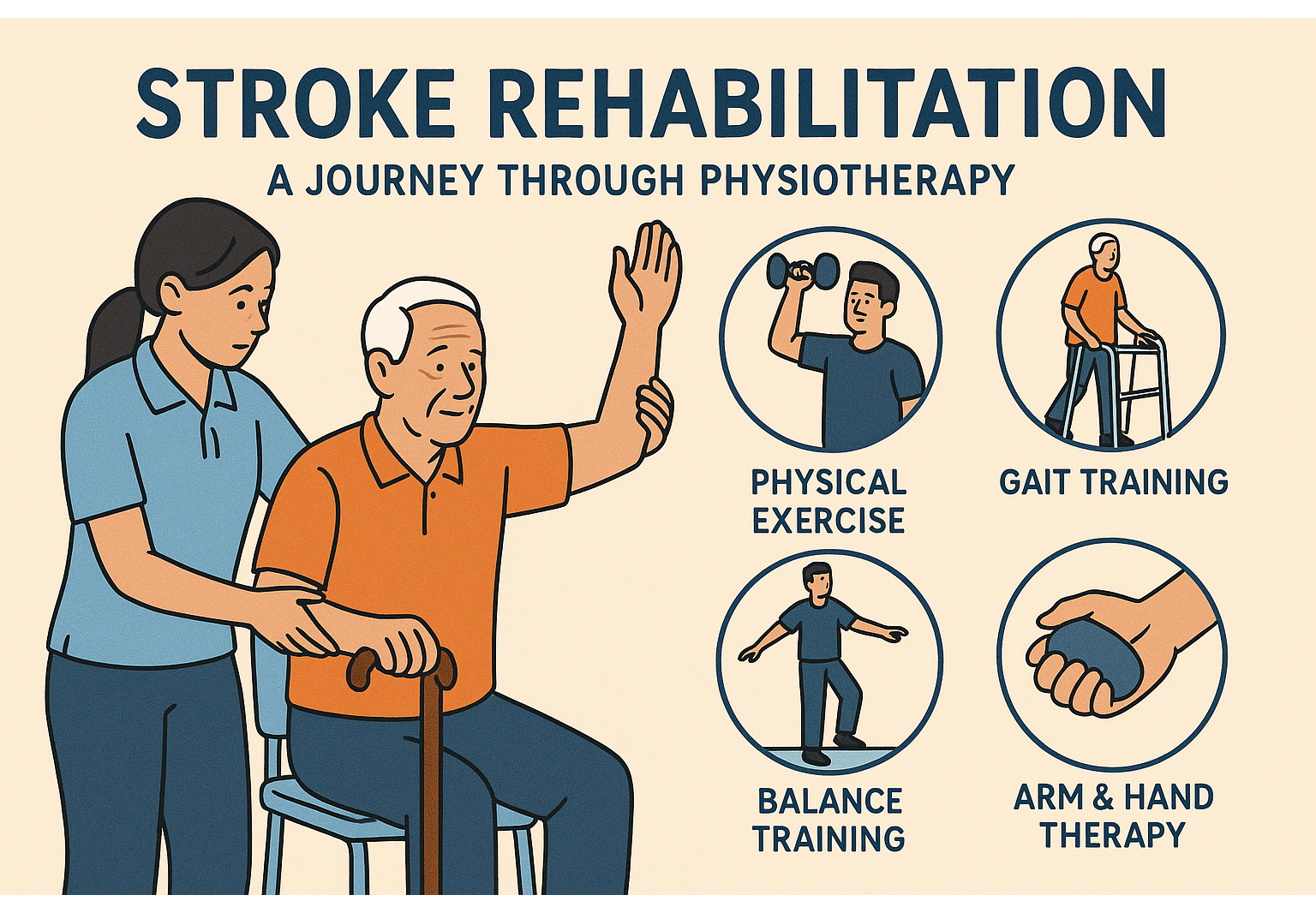
Stroke Rehabilitation: A Journey Through Physiotherapy
Every year, millions of people worldwide experience the life-altering event of a stroke. While the initial medical response is critical, what truly defines a stroke survivor’s long-term quality of life is rehabilitation—and at the heart of that recovery journey lies physiotherapy.
A stroke occurs when the blood supply to a part of the brain is interrupted or reduced, depriving brain tissue of oxygen and nutrients. The aftermath can vary greatly depending on the location and severity of the stroke:
• Muscle weakness or paralysis (usually on one side of the body)
• Loss of balance and coordination
• Difficulty walking or performing daily tasks
• Speech and swallowing challenges
• Cognitive impairments
The Role of Physiotherapy in Stroke Recovery
Physiotherapy helps stroke survivors regain movement, balance, coordination, and confidence. A structured rehab plan focuses on:
1. Neuroplasticity: Encouraging the brain to rewire itself and regain lost functions.
2. Mobility Training: Relearning how to sit, stand, walk, and use limbs.
3. Strength & Endurance Building: Preventing muscle wasting and improving stamina.
4. Joint Range of Motion: Keeping joints flexible to avoid contractures.
5. Balance & Gait Training: Reducing fall risk and enabling safer walking.
6. Task-Oriented Therapy: Practicing everyday activities like dressing or eating.
Common Techniques Used in Stroke Physiotherapy
• Bobath Concept: Normalizes tone and movement patterns
• Proprioceptive Neuromuscular Facilitation (PNF): Enhances motor control
• Constraint-Induced Movement Therapy (CIMT): Promotes use of affected limbs
• Mirror Therapy: Stimulates brain through visual feedback
• Functional Electrical Stimulation (FES): Aids in muscle activation
• Treadmill & Robotic Gait Training: Relearn walking in a controlled environment
At Physionautics, we understand that stroke rehabilitation is not just about exercises; it’s about restoring independence, hope, and dignity.
• Specialized neuro-physiotherapists
• Personalized home & clinic rehab plans
• Emphasis on holistic recovery—physical, emotional, and cognitive
• Support for caregivers and family
• Use of latest technologies and evidence-based practices