
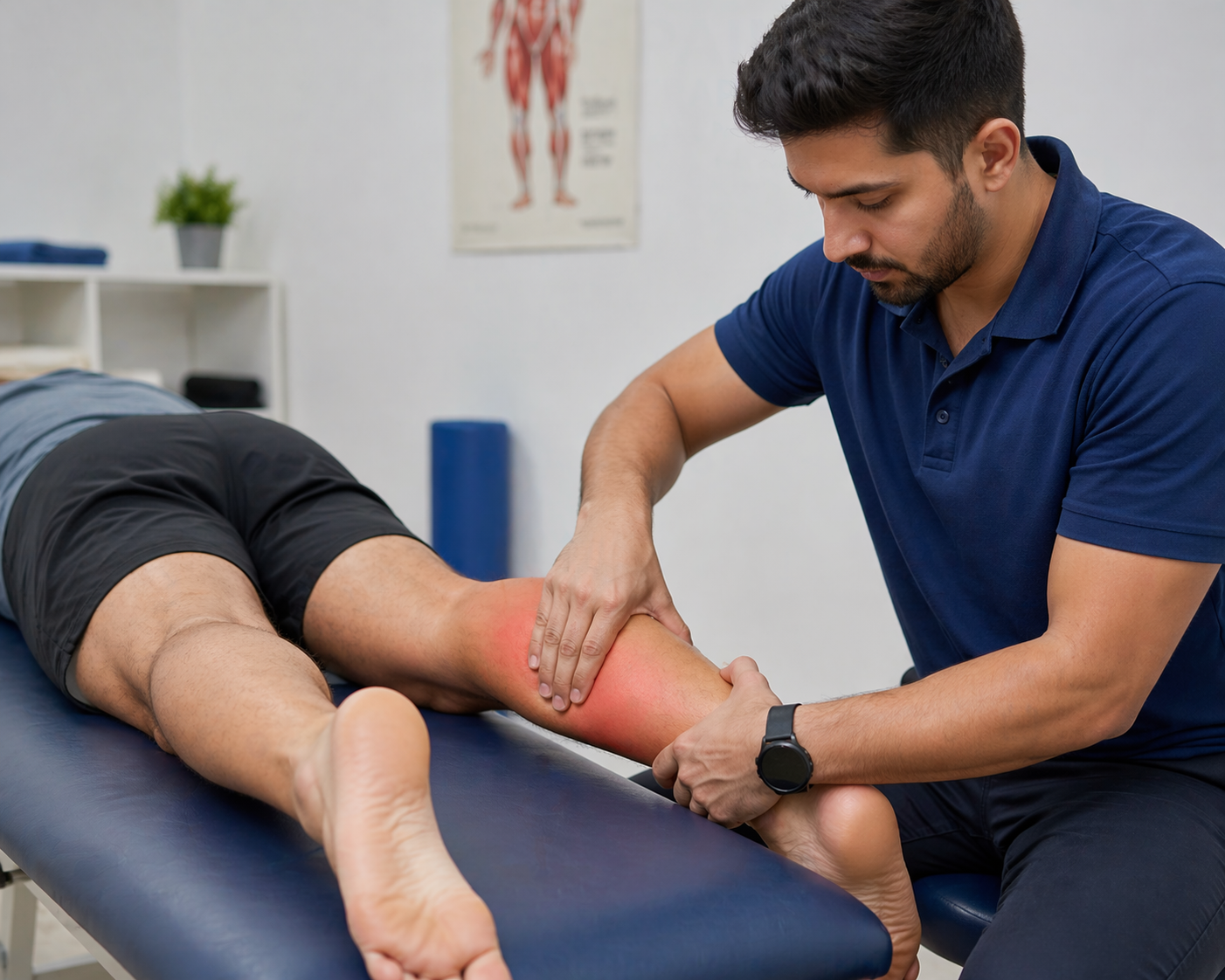
Calf pain is very common and is often ignored until it starts affecting daily activities. The calf pain comes with tightness, heaviness, or a pulling pain in the back of the leg, mostly while walking, running, or climbing stairs. Sometimes it increases after rest, while in other cases it increases with activity. The calf muscles are responsible for almost every movement of the lower body, so even a small problem can lead to discomfort during activities of daily living. This pain develops due to overuse, injury, sudden increase in physical activity, lack of proper warm-up, or continuous strain on the muscles. In most individuals, tightness is present, but the underlying issue is often weakened or reduced capacity of the muscle to handle load. That is why only stretching does not give long-term relief and the pain tends to return.
When calf function is affected, it can lead to stiffness, reduced strength to push-off from the ground while walking, and a feeling of fatigue in the leg. Physiotherapy in calf pain focuses on both relief and recovery by improving flexibility as well as strength. Along with manual therapies, stretching, strengthening exercises such as Muscle energy technique, controlled heel raises help the muscle adapt to load and function better. Improving balance, correcting movement patterns, and addressing contributing factors like footwear or posture are also important parts of treatment. Gradual progression in activity and exercises, proper warm-up, and not ignoring early signs of discomfort can help prevent the condition from worsening. Calf pain is manageable with the right approach, and timely physiotherapy can help restore normal movement and reduce the chances of recurrence.